
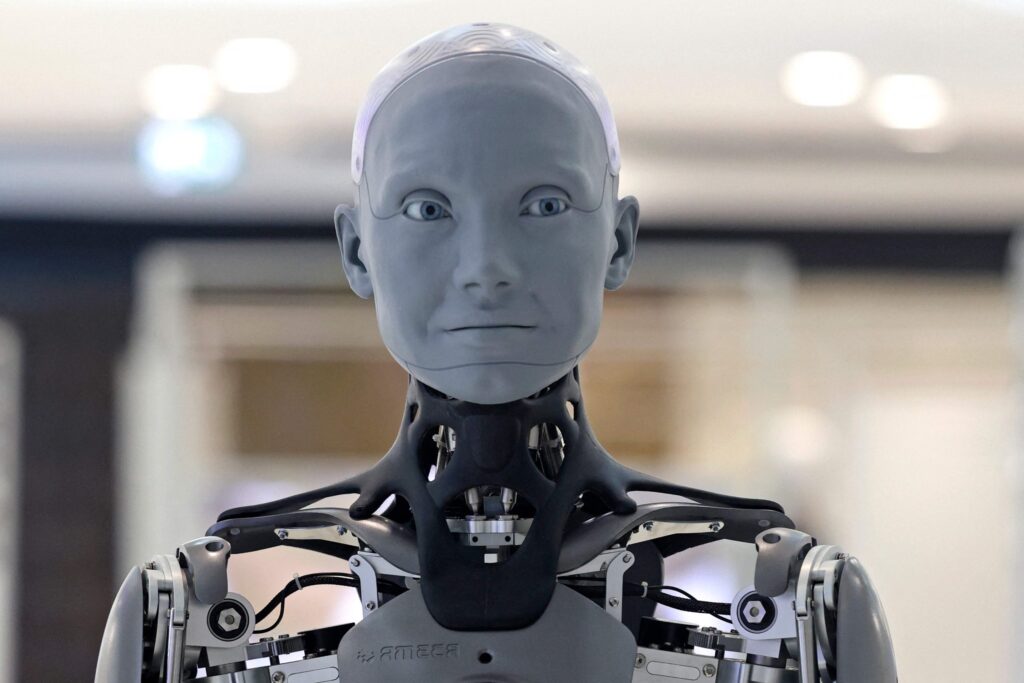
The scene, as recalled, belongs to 1972: a fourth-grade classroom in a Bronx public school, and standing at the front a six-foot-tall machine. Not a projector, not a television cart — a fully computerized robot that taught children, sometimes several at once. It carried encyclopedic and curriculum material in its electronic memory, greeted students by name, adapted its pace to how fast each child learned, and even knew their hobbies. The children adored it. Some, by their own admission, liked learning from it more than from a human teacher.
Its name was Leachim — an anagram of Michael, honoring its creator, the scientist-inventor Michael J. Freeman, Ph.D. Today, what ran in that Bronx classroom reads like a missing chapter of artificial intelligence history: personalized instruction, endless repetition without judgment, engagement tuned to the individual child. Half a century before chatbots promised one-on-one tutoring for every student, a school in New York had a working approximation of it, built from the technology of its era.
The Robot That Never Lost Patience
Students treasured what the release calls its “ceaseless patience” — the machine never made a child feel inadequate, no matter how many mistakes they made. Matthew Gray, one of the original fourth-graders, only recently learned the robot had resurfaced. he wrote: “As one of Leachim’s original fourth-grade students, I will never forget its positive influence over my entire life”.
Leachim became a media sensation soon after its debut in the 1970s, with press coverage and invitations to live television. Visitors were so baffled that some suspected a small man was concealed inside. There wasn’t. Inside was complex computerized machinery, and Freeman’s work went on to reshape several industries — most visibly the educational toy market, where Leachim helped lay the groundwork for commercial products worth billions, among them the 2-XL Robot, widely regarded as the first smart toy.
Heads To Auction
The announcement that stunned collectors arrived in May: Leachim, together with its prototypes, patents, inventor notes and its boxed-up commercial descendants, will go under the hammer in a public auction in late 2026. No auction date and no auction house have been named yet, but museums, institutions and private collectors worldwide are expected to follow the sale closely.
“Leachim was not simply a robot,” said Suzanne, the machine’s curator and spokesperson. “It is an important missing link in the technological history of artificial intelligence, educational technology, and American invention.”
That claim is easy to test against the Bronx classroom of 1972. A tutor that knew each child’s name, hobbies and learning speed, never tired, never shamed, and made students smile ear to ear — modern AI in education is still chasing that description. The difference is that Leachim did it with the computers of fifty years ago, and did it well enough that its students remember it fondly today. Whoever wins the auction will not simply be buying a machine. They will be buying the proof that the dream of a patient, personal teaching robot is older than the industry now chasing it.




