Jonathan Lear died on Sept. 22 at 76. For nearly 30 years he taught at the University of Chicago, where he was both a philosopher and a practicing psychoanalyst.
Lear was born in New York in 1948. He graduated cum laude from Yale in 1970 with a degree in history, then studied philosophy at Cambridge and earned his PhD at Rockefeller University in 1978. His early work was on Aristotle’s logic. His 1988 book, Aristotle: The Desire to Understand, became a standard introduction to the Greek philosopher for students.
Ancient ethics pushed him somewhere unexpected. He decided philosophy needed a better theory of the mind, so he trained as a clinical psychoanalyst at the Western New England Institute for Psychoanalysis. That training fed his writing on Freud, Kierkegaard, Wittgenstein and Heidegger.
Richard Moran, a Harvard philosophy professor, said Lear did more than any other philosopher of his generation to bring Freud into contemporary philosophical debate. “Jonathan Lear was a brilliant and unclassifiable philosopher,” Moran said.
Recruited from Yale
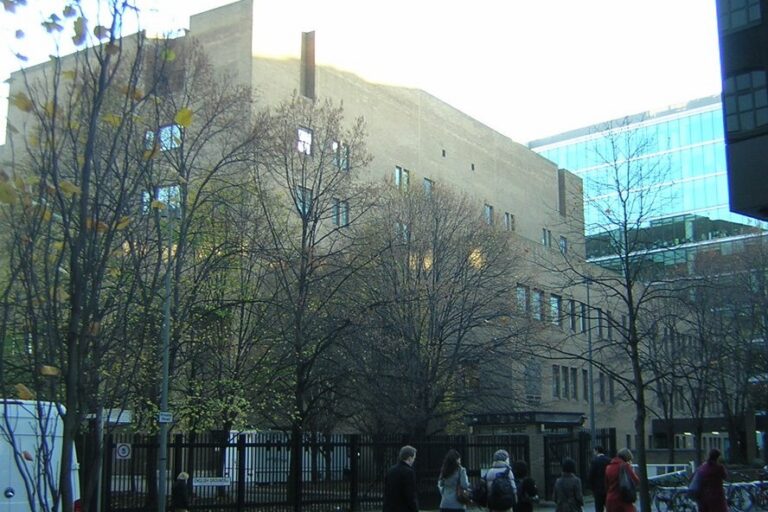
Robert Pippin, then chair of the Committee on Social Thought, noticed Lear while he was teaching at Yale in the early 1990s. Pippin had read Love and Its Place in Nature. “I got in touch with him and asked if there’d be any chance he would be interested in coming to Chicago,” Pippin recalled. “He was interested.” Lear arrived in 1996 and kept seeing patients in his office on the fifth floor of Foster Hall.
He held the John U. Nef Distinguished Service Professorship in the Committee on Social Thought and the Department of Philosophy. From 2014 to 2022 he was the first Roman Family Director of the Neubauer Collegium for Culture and Society. Since 2023 he had sat on the Laboratory Schools Board.
He co-taught with the Nobel-winning novelist J.M. Coetzee and the poet Mark Strand, both fellow members of the Committee on Social Thought.
Radical Hope and the Crow Nation
His 2006 book, Radical Hope: Ethics in the Face of Cultural Devastation, took up the words of Chief Plenty Coups of the Apsáalooke, or Crow Nation, who had watched his people’s way of life disappear: “After this, nothing happened.” Lear spent time on the Apsáalooke Reservation in Montana to work through the question of how people live well when their culture may be destroyed. “It has become a book for our times,” Pippin said.
At the Neubauer Collegium he set up collaborations between Chicago faculty and Native scholars and artists. One result was the 2020 exhibition Apsáalooke Women and Warriors, shown jointly with the Field Museum of Natural History. It was the first large-scale exhibition in the museum’s history curated by a Native American.
His last book, Imagining the End: Mourning and Ethical Life, appeared in 2022. In his 2024 Ryerson Lecture he returned to mourning and gratitude. “We do not know when or how we will die,” he said. Gratitude, in his words, is “a way of making a commitment to meaningfulness.”
Students and colleagues
University President Paul Alivisatos said few had embodied the ethos of the university as well as Lear. Hanna Holborn Gray, the president emeritus, called his commitment to the institution “unparalleled” and said he treated everyone with courtesy, whether he agreed with them or not.
Former students described a teacher who made room for them. Amy Levine, PhD’24, said his course on philosophy and psychoanalysis “genuinely changed my life.” Colleague Matthew Boyle said Lear “loved to listen to other people talk about subjects they knew well.”
Emma Eigen, whose dissertation committee Lear chaired for the last eight years, quoted one of his final emails to her: “I am writing again, and that makes me happy.”
His friends called him a great raconteur with a taste for Bob Dylan and a gin martini. Lear’s honors included the Andrew W. Mellon Foundation Distinguished Achievement Award, and he was a Fellow of the American Academy of Arts and Sciences.
He is survived by his wife, Gabriel Richardson Lear, a professor in the Committee on Social Thought; his children, Sophia and Samuel; and his sister, Judith Lear.