
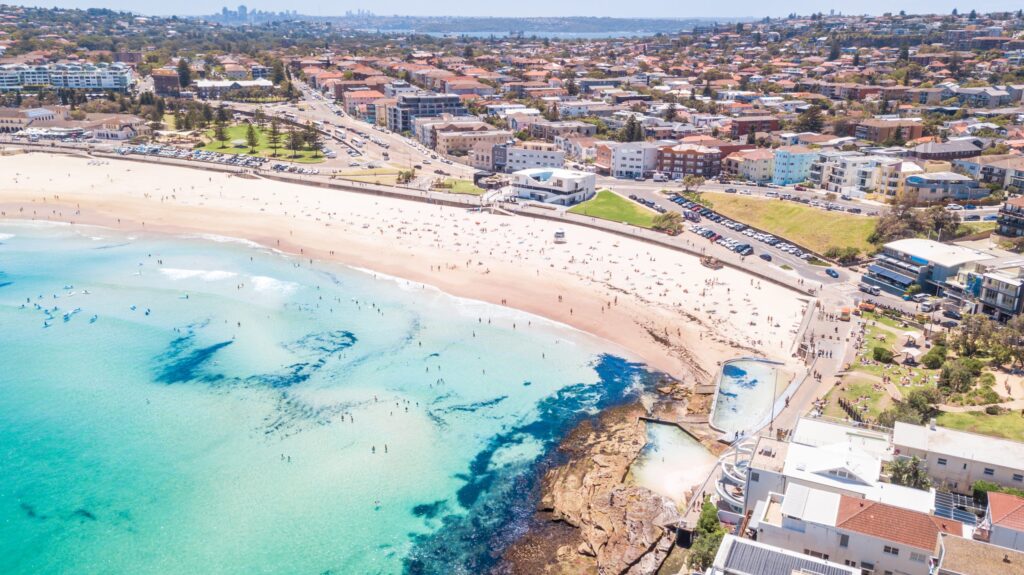
Fifteen people died at a Hanukkah gathering on Bondi Beach on Sunday, and by Tuesday the Australian Federal Police commissioner was calling it “a terrorist attack inspired by Islamic State”. Krissy Barrett was blunt about the motive too. “It appears the alleged killers were interested only in a quest for a death tally,” she said.
The suspects were a father and son, aged 50 and 24. Police shot the father, named by state officials as Sajid Akram, dead at the scene. His son was taken to hospital. Those killed ranged in age from 10 to 87.
Tuesday’s news conference was the first time officials had put a name to the ideology. Prime Minister Anthony Albanese said the conclusion rested on evidence, including “the presence of Islamic State flags in the vehicle that has been seized”. New South Wales Police Commissioner Mal Lanyon added that the car, registered to the younger man, also held improvised explosive devices and two homemade flags.
A trip to the Philippines
The pair had been abroad shortly before the attack. The Philippines Bureau of Immigration said Sajid Akram and Naveed Akram, 24, arrived on November 1 and left on November 28, listing Davao as their final destination. Lanyon said investigators would look into why they went and where they stayed. Australian authorities had not yet named the younger man.
Militant groups in the southern Philippines, Abu Sayyaf among them, once pledged support to Islamic State. Decades of military offensives have since weakened them, and Philippine officials say there is no recent sign of foreign fighters in the south.
Guns and questions
Anger and questions had been building for three days: how the pair planned it, and whether Australian Jews had been protected well enough as antisemitism rose. One detail stung. The older man had built up his six weapons legally. Albanese said he would restrict access to guns further, and he and several state leaders pledged what would be the biggest tightening of Australia’s already strict laws since the 1996 Port Arthur massacre, in which a shooter killed 35 people in Tasmania.
Twenty-five people were still in hospital, ten of them critical and three in a children’s hospital. Among them was Ahmed al Ahmed, a 42-year-old Syrian-born fruit shop owner filmed tackling and disarming one of the gunmen. He then pointed the man’s weapon at him before setting it on the ground. Albanese visited him, and said he faced more surgery on Wednesday for shotgun wounds to his left shoulder and upper body. “He is a true Australian hero,” the prime minister told reporters after meeting al Ahmed and his parents for 30 minutes.
The lifeguards
Bondi’s blue-shirted lifeguards drew praise as accounts of their response emerged. Rory Davey carried out an ocean rescue as people ran into the sea fully clothed. Jackson Doolan posted a photo of himself sprinting barefoot from Tamarama beach, a mile away, with a first aid kit in his hand while the shooting was still going on.
“They heard the gunshots and they left the beach and came right up the back here into the scene of the crime, into harm’s way while those bullets were being shot,” said Anthony Caroll, a star of the television show “Bondi Rescue”.
Thousands have since gone to Bondi to leave flowers at a makeshift memorial. Former Prime Minister John Howard, who overhauled the gun laws in 1996, was among Tuesday’s visitors. Israel’s ambassador, Amir Maimon, also visited and was welcomed by Jewish leaders.
Australians also rolled up their sleeves. Lifeblood said nearly 50,000 donation appointments were booked on Monday alone, more than double the previous record, and about 1,300 people were giving for the first time. Bondi’s own centre had no free slots before December 31.




