
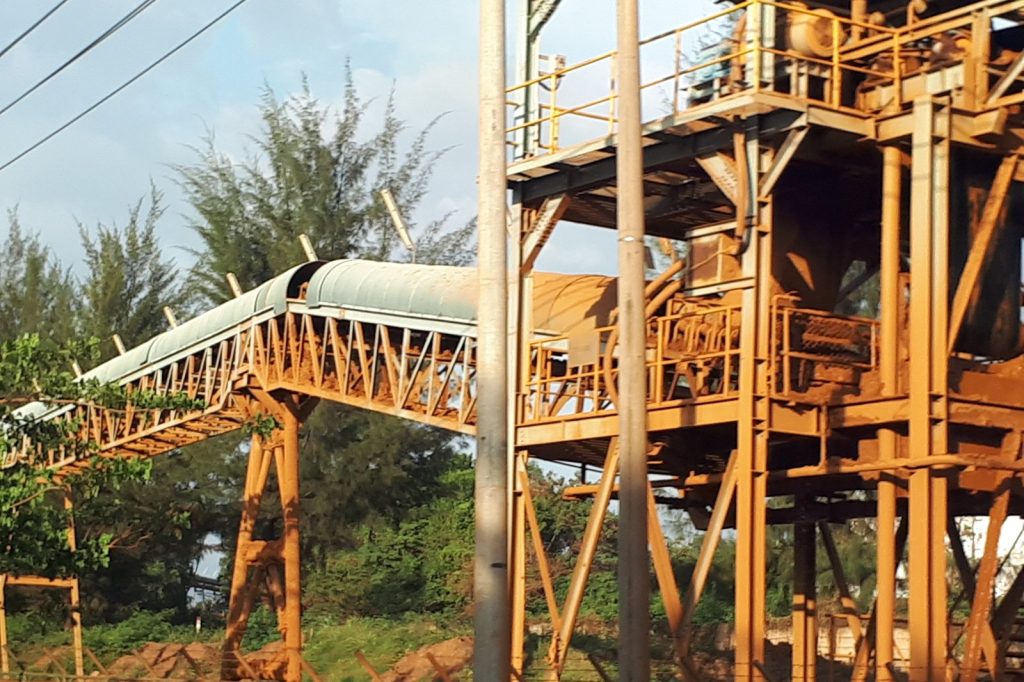
Muddy water about 50 centimeters deep filled homes in Kawasi Village on Obi Island, Indonesia, after heavy rain fell from June 10 to 13, 2025. Three villages went under. The island is where Harita Group, one of the country’s largest nickel mining companies, operates.
Cultural Survival, an advocacy group, reported that a sediment pond the company built to hold runoff from its mining and refining work partly collapsed. The material poured into the Todoku River, which overflowed into the settlement. A local news outlet reported dead aquatic life, including giant eels, and the sea turned red.
“Throughout 2025, there have been multiple floods,” a community leader said. “Residents have experienced flooding repeatedly, but there has been no attention from the company.” The leader said the pond’s collapse had been raised with Harita and nothing had been resolved.
Two more villages hit
Soligi village lost homes and schools to the Akelamo River when it overflowed. In Wayaloar village the Wayaloar River flooded houses holding 280 people in 70 households, and one resident died. Residents said Harita’s mining and forest clearing contributed to the June 13 flood in Soligi.
What the pond was supposed to do
Reporting by the Organized Crime and Corruption Reporting Project and the Gecko Project found that from 2012 company executives knew runoff from the mines carried chromium-6 at 155% to 240% of the legal limit at different points. Company documents show the ponds were built to trap this runoff. They did not lower chromium-6 in Kawasi’s drinking water, the reporters found. The reporting also suggests a high-pressure acid leach refinery, added to make battery-grade nickel for electric vehicles, probably made the problem worse.
This was not the first flood. In July 2024 a small dam on the Todoku River collapsed and flooded Kawasi homes. The pond sits on natural wetlands next to the village. WALHI North Maluku, a regional environmental group, said residents also lack reliable electricity and clean water.
Protest and pushback
WALHI said residents went straight to the company’s corporate social responsibility department and got an inadequate response. It also said at least one community leader is being criminalized and intimidated for protesting. Kawasi leaders say Harita used the same tactic against protests in 2016 and 2017 over the land seizure that made room for the pond.
Residents are asking Harita to repair flood-damaged homes and infrastructure, fix the waste management failures behind the disaster, and put in writing its plans to restore electricity and clean water.
Elsewhere in Indonesia, the group Rainforest Rescue reports that residents of Torobulu in Southeast Sulawesi are challenging a company that mines nickel a few meters from their homes. Drone footage shows houses close to the edge of the pits. Several people there have been harassed by judicial authorities, the group said, and women lead much of the resistance. Indonesia is the world’s top nickel producer, with about 2.4 to 2.5 million tons in 2025 and more than 60 percent of global supply.
Sources
- Nickel Waste Floods Homes in Indonesia, Sparking Protests
- Communities around the world have the right to say NO to mining
Sources
- Nickel Waste Floods Homes in Indonesia, Sparking Protests
- Indonesian farmers fight for their land in nickel-mining boom




