
KIDLINGTON, November 26, 2026 — A seventh suspect has been arrested in connection with the 22,704-ton waste dump in Kidlington, Oxfordshire, a site the Environment Agency considers Britain’s largest-ever fly-tip. The five-month clearance operation concluded in August at a cost of £6 million, funded by the public purse.
The Kidlington Case: Anatomy of Britain’s Costliest Fly-Tip
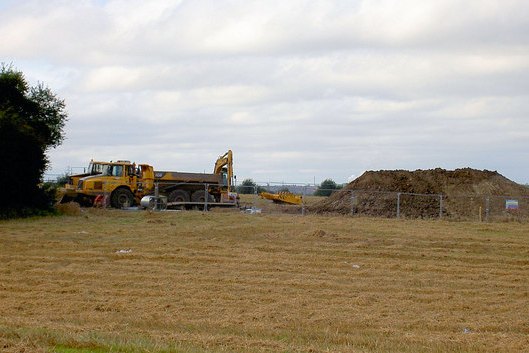
The waste began appearing on July 2, 2025, on greenbelt land hemmed in by the A34 dual carriageway and the River Cherwell, a tributary of the Thames. By the time the site was closed in October, the mound stretched 150 metres and stood 20 feet high, covering 8,000 square metres — an area larger than Wembley Stadium. It contained tyres, shredded plastic and household refuse. A critical incident was declared by the Environment Agency, though regular water quality sampling later found no significant environmental impact on the river.
Despite a cease-and-desist letter issued early in the process, dumping continued until the gates were shut. The removal, carried out by Acumen Waste Service, took five months and concluded in August 2026. Concrete blocks and padlocked gates have since been installed to prevent a recurrence. The investigation, led by the National Environmental Crime Unit, has so far yielded seven arrests between November 2025 and November 2026. The suspects, aged 21 to 69 and hailing from locations including Ashford, Stanwell, Andover, Slough, Guildford and Northolt, have all been released on bail. No charges have been brought.
The Criminal Business Model: How Gangs Monetise Waste Disposal
Against this backdrop, the Lords Environment and Climate Change Committee has warned that organised crime gangs are illegally dumping millions of tons of waste across the UK countryside every year. The business model exploits the gap between the legitimate cost of disposal and the price gangs charge to make waste disappear. Legitimate operators pay landfill tax and gate fees; criminals undercut them, pocket the fee, and tip the load on private or greenbelt land. The Kidlington site, adjacent to a major arterial road yet screened from immediate view, offered the logistical advantages gangs seek: easy access for heavy goods vehicles and a low risk of interruption during the hours of darkness.
The demographics of those arrested — ranging from a 21-year-old to a 69-year-old — suggest a hierarchy of roles, from drivers and plant operators to coordinators. Section 33(5) of the Environmental Protection Act 1990 now treats the person who controls a vehicle used for dumping as knowingly causing the deposit, a provision designed to reach the hauliers who form the logistics backbone of the trade.
Regulatory Gaps: Carrier Registration, Broker Loopholes and Enforcement Delays
The system relies on a chain of registration for waste carriers and brokers, yet the Kidlington timeline reveals how slowly the machinery moves. Waste was first reported on July 2, 2025; a cease-and-desist letter followed, but the dumping persisted for three months until the site was closed in October. The cleanup did not begin until after that closure and took a further five months. In the corridors of regulation, the lag between detection, intervention and remediation is a window gangs factor into their risk calculations.
Environment Secretary Dame Angela Eagle has pointed to “more officers on the frontline and drones in the sky” as new enforcement tools. The National Environmental Crime Unit, leading the Kidlington investigation, represents a centralised effort to close the intelligence gap between local authorities and the Environment Agency. Since September 1, 2026, the maximum fixed penalty for fly-tipping in England has risen from £1,000 to £5,000, a fivefold increase intended to shift the cost-benefit analysis for low-level offenders, though organised gangs operating at industrial scale are unlikely to be deterred by fixed penalties alone.
The £6m Cleanup: Who Pays When Criminals Vanish
What is at stake becomes brutally clear when the perpetrators cannot be found or convicted. The £6 million bill for Kidlington was met by the Environment Agency, effectively the taxpayer. Under Section 59 of the 1990 Act, the authority — in England, the Environment Agency or the district council — may serve a notice on the occupier requiring removal within at least 21 days, regardless of fault. If the occupier fails to comply, the authority can do the work itself and recover costs. It can also recover costs from anyone who deposited or knowingly caused the deposit. But when the criminals vanish, or when assets are hidden behind corporate veils, the recovery chain snaps.
Landowner Liability: The Legal Trap for Private Property Victims
For the private landowner, the wider picture is a legal trap. Section 59 does not require the occupier to be at fault; the notice can be served simply because waste sits on their land. The occupier’s shield is a narrow one: an appeal to a magistrates’ court within 21 days, which succeeds only if the court is satisfied they neither deposited nor knowingly caused nor knowingly permitted the deposit. A “due diligence” defence exists — proving all reasonable precautions were taken, such as locked gates, barriers and access checks — but the burden of proof rests on the victim.
If the occupier is a tenant who fails to act, cannot be found, or successfully appeals on the grounds of non-involvement, the authority may then turn to the landowner under Section 59ZA. Two further regimes — Section 215 of the Town and Country Planning Act 1990 and Community Protection Notices under the Anti-social Behaviour, Crime and Policing Act 2014 — can also be deployed against the landowner, neither of which turns on who dumped the waste. The owner who did nothing wrong cannot assume the council will clear it; the Act says the authority “may” remove the waste, not that it must.
Policy Response: Higher Fines, Drones and the National Environmental Crime Unit
The policy response is hardening. The fixed-penalties amendment that took effect on September 1, 2026, raised the upper limit to £5,000 for fly-tipping and £750 for littering. The National Environmental Crime Unit is now leading complex investigations like Kidlington, where the sheer volume — 22,704 tons — signals an operation far beyond opportunistic dumping. Colin Chiverton, Area Environment Manager for the Thames at the Environment Agency, said the clearance is fully completed and teams are working tirelessly to find those responsible. The seventh arrest, a 35-year-old man from Northolt, was announced on November 26, 2026.
Sources
- Seventh arrest is made over Britain's biggest-ever fly tip
- Illegal Dumping: What Can You Do About Fly-Tipping on Private Land in England?
Photo: Steve F (CC BY-SA 2.0)