
Twenty-five years. That was the sentence handed to Alberto Fujimori in 2009 for paramilitary massacres of 25 civilians, and he served 16 of them. When he died on Sept. 11, he had been out of office for more than two decades. Peru was still fighting about him.
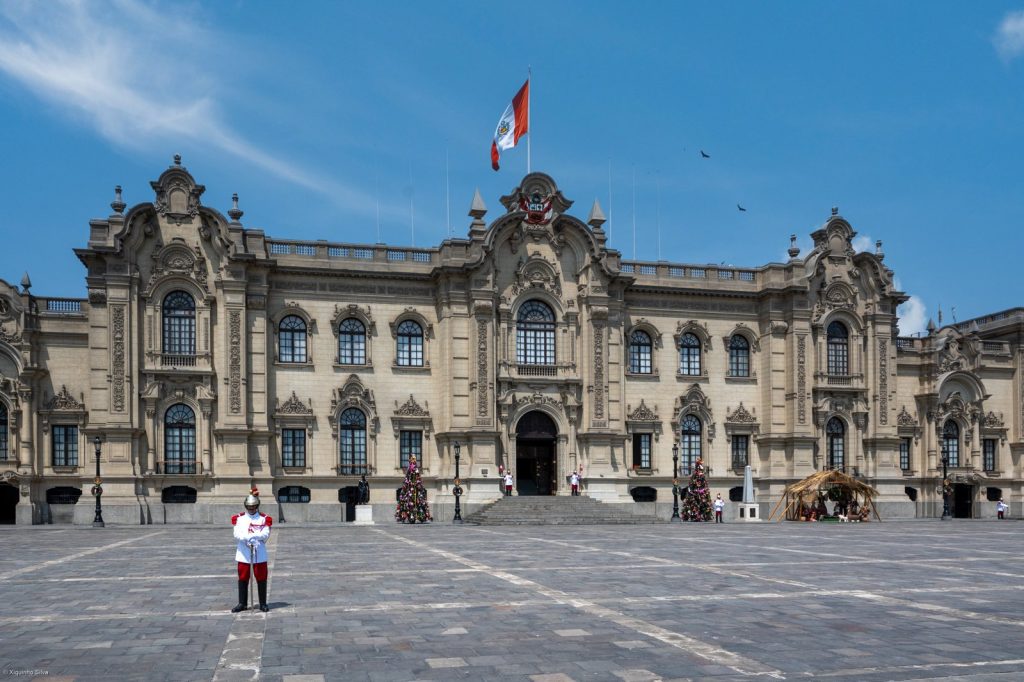
He was buried in Lima with state honors over the weekend after a three-day public wake. Thousands of people lined up to see the casket. Some queued for hours and left in tears. “This is a demonstration of the gratitude the Peruvian people feel,” said Fortunato Lagura, a business administrator who waited more than two hours. Other mourners shouted “assassin” and “corrupt” as police vehicles escorted the casket to the presidential palace, where President Dina Boluarte gave him a red-carpet farewell.
From a tractor to the presidency
Fujimori was born in Lima to Japanese immigrants. He trained as an agricultural engineer, became a university rector, and won the presidency in 1990 with left-wing backing, after campaigning aboard a tractor under the slogan “Honor, technology, work.” His opponent was Mario Vargas Llosa, who later won the Nobel Prize in literature.
Supporters credit him with pulling Peru out of hyperinflation and hunger through the “Fuji-shock,” and with crushing leftist insurgents who had terrorized the country for more than a decade with car bombs and massacres. Many also remember the aid. Michael Santa Cruz, a computer technician from northern Peru, was 7 when Fujimori walked into his school in Chongoyape and handed out food, clothes and school materials. The town got two new school buildings, paved roads and electricity. “We used to use kerosene lamps at night. Fujimori gave us electricity, and oh, what joy!” he said.
The record against him
His two terms also carried power grabs, corruption and abuses. In 1992 he announced, calmly, that the military would take over Congress and the courts. In 2000, videos surfaced of his spymaster Vladimiro Montesinos bribing lawmakers, businessmen and journalists with stacks of cash. Fujimori fled the protests to Japan and faxed in his resignation.
Courts convicted him of corruption, embezzlement, usurpation of powers, espionage and the kidnapping of a journalist, on top of the massacre case. He was Peru’s first former president jailed after trials widely seen as fair. Other cases were still pending at his death.
Rosa del Carmen Reátegui is one of hundreds of mostly Indigenous and poor women who say Fujimori’s family planning program forced or tricked them into sterilization. “He died without asking for forgiveness from his victims,” she said. “He was never convicted for our sterilizations.”
A movement that outlived him
Gonzalo Banda, a Peruvian political scientist, called Fujimori a prototype: “He was Milei before Milei. Bukele before Bukele. Chávez before Chávez.” Mauricio Zavaleta, another political scientist, described a politician who comes to power through elections and then undermines institutions from the executive branch.
Fujimorismo now holds influence in Congress, the presidency, the top court and the ombudsman’s office. His daughter Keiko Fujimori finished second in the last three presidential elections, each time by a small margin. Zavaleta said her party is the best-organized political machine in the country.
The path to his deathbed at home was political too. Then-President Pedro Pablo Kuczynski pardoned him in 2017 to win votes from Fujimorista lawmakers during an impeachment fight. A court ruled in 2019 that the pardon violated international law and sent him back to prison. Peru’s top court, whose magistrates were appointed by Congress with key backing from Fujimorista legislators, restored the pardon the previous December, defying the Inter-American Court of Human Rights. Boluarte, who took office as a leftist vice president and has since allied with the right, authorized his release.
Banda said the old consensus that Fujimorismo bore responsibility for terrible crimes is being challenged more and more. Peruvians once split over the man now resemble “two countries that broke ties but now send ambassadors to each other.”
A Lima taxi driver, José Orizano, put the view of many in fewer words. “Fujimori was corrupt. I don’t doubt it,” he said. “But so are all the rest. At least he did something for Peru.”




