
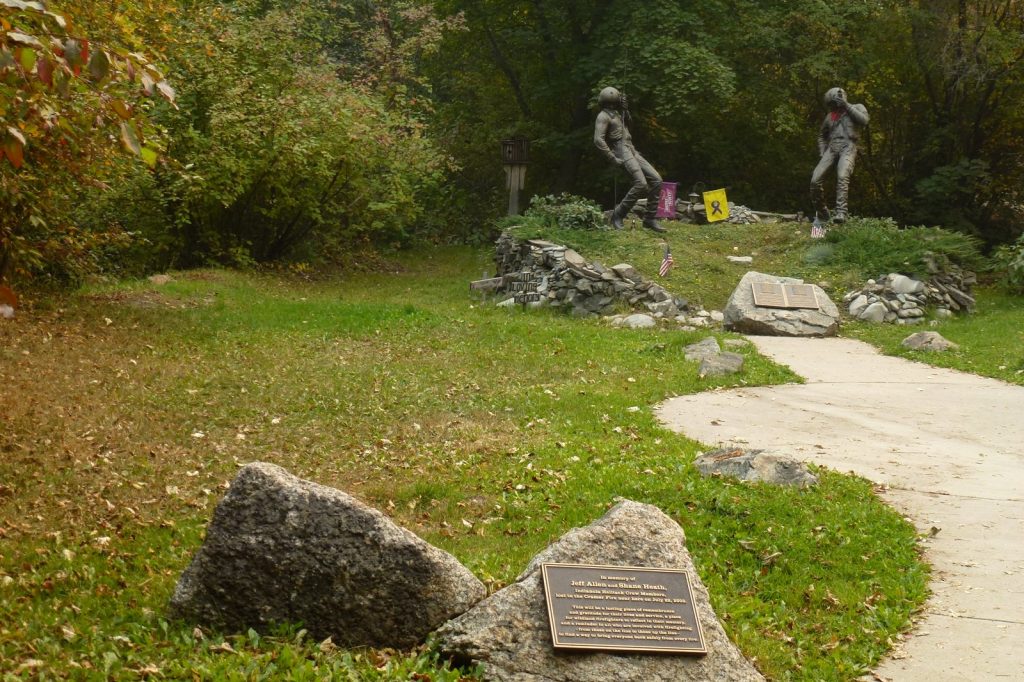
When the smoke clears, families are left counting the cost. This week, the National Wildland Firefighter Week of Remembrance is underway, and for the people who have lost someone to the flames, the calendar marking does little to ease the ache. The observance runs through early July, a time when much of the West is already burning.
Crews are stretched thin, working long shifts in air thick with smoke. The heat and the fatigue are relentless.
It is a brutal rhythm, the report notes, one that tests even the most seasoned firefighters. For a spouse in Montana, a parent in California, a child in Colorado, that rhythm stopped cold the day their firefighter did not come home. Those families carry a weight that never fully lifts.
The remembrance week offers them a moment to see that the nation has not forgotten. It is a small thing, but not a small thing.
The work itself is more than a job. The report describes it as a calling — one that demands courage and selflessness. Men and women suit up daily and walk into rugged, unpredictable terrain.
They go toward the fire when every instinct says to run. A sense of duty drives them. A commitment to protecting communities and wildlands.
Every fire contained, every home saved, every community protected is a victory written in sweat and soot. But not every fire is contained.
Not every firefighter comes home. Memorials and moments of silence will be held this week at fire camps and agency offices across the country. Flags will fly at half-staff in some places.
Families will gather. Stories will be told.
The hope, the report says, is that the nation will listen and remember long after the week is over. The observance comes during an active fire season. Crews are already working in smoke-choked air.
The conditions are dangerous. The terrain is unforgiving. The heat and fatigue test everyone on the line.
Yet amid the danger, there is also profound purpose. The Week of Remembrance asks the public to consider that reality, and to hold space for those who did not come home.
For the families, the public acknowledgment matters. It is a signal that the sacrifice is seen. That the life given was not given in vain.
That the calling, the courage, the selflessness — it all counted for something. The report makes clear that wildland firefighting is not just a career.
It is a calling. The men and women who do it know the risks. They accept them.
Their families accept them too, though the acceptance never makes the loss easier. This week, the nation pauses. Memorials will be held.
Moments of silence will be observed. Flags will fly at half-staff.
Families will gather and tell stories. The hope is that the nation will listen. And remember.
Long after the week is over, the families will still be counting the cost.




