
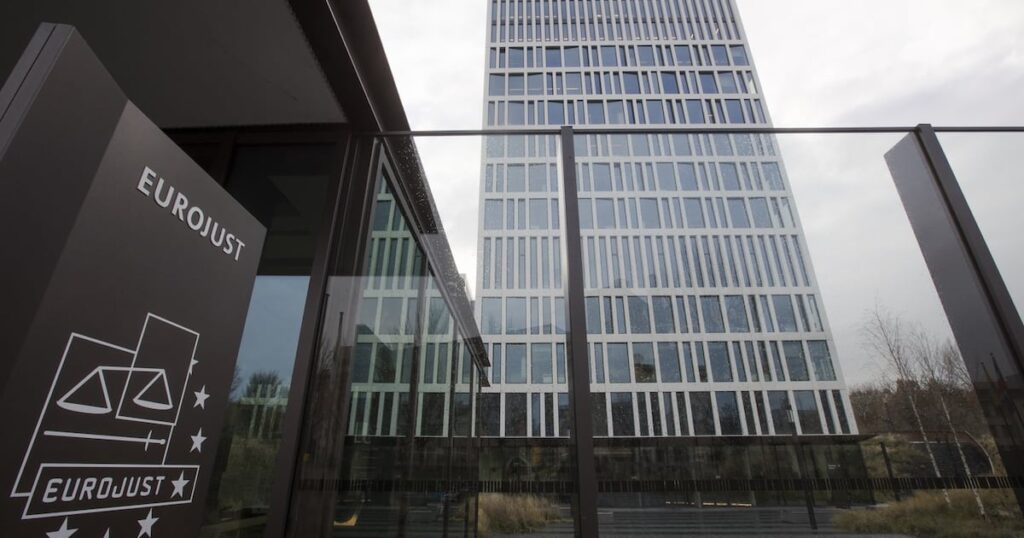
Nine people were arrested on April 11, 2024, in a coordinated European operation against a medicinal cannabis investment scheme that Eurojust estimates took in close to €645 million.
The pitch was a crowdfunding programme that raised a minimum of €50 per investor for the supposed development of cannabis plants. No plants were ever bought, Eurojust said, although the organisers claimed to work with legitimate, licensed enterprises that would grow them. The fraud ran from at least January 2020 to July 2022. In Germany, France and Spain alone, more than 4,500 victims have filed formal complaints.
Eurojust describes the whole scheme as a pyramid or “Ponzi fraud” that promised extremely high returns. Investigators in Germany and Spain, later joined by counterparts elsewhere in Europe, found that investors had been paid back only in part. Most of the money went to affiliates, to keeping the operation running, and to extensive online campaigns that drew in more people. A web of international enterprises handled the laundering. Eurojust said the scheme appears to have been run by a Russian criminal network, with an affiliated crime group based in Germany. The Daily Scrum News, which calls the case “JuicyFields”, reported that early investors were rewarded, which encouraged larger deposits, and that the scheme collapsed in July 2022 when withdrawals suddenly stopped.
The numbers
Victims in Germany and Spain say they lost at least €51.5 million. The total invested is put at close to €645 million. Around 550,000 people worldwide registered as online investors, most of them European, and about 186,000 of them actually sent money, by cryptocurrency or bank transfer.
Action day
Eurojust has backed the national authorities since 2022, including helping Germany, Spain and France set up and fund a joint investigation team. That work led to a Joint Action Day coordinated at Eurojust. At the request of German and Spanish authorities, teams also moved in Estonia, Latvia, Italy, Malta, Poland, Portugal, the United Kingdom and the Dominican Republic. French authorities analysed the crypto flows and joined searches in Germany and Spain.
Europol took the lead on operational coordination from the start and supplied analytical support, and shared the results of the financial investigations with the countries involved. On the day, it sent officers with mobile offices to locations around the world.
The Daily Scrum News put the force at more than 400 officers in 11 countries, who carried out nine arrest warrants and 38 house searches. It reported seizures of €4.7 million in bank accounts, €1.515 million in cryptocurrencies, €106,000 in cash and €2.6 million in real estate. Eurojust said more than thirty places were searched, and that several million euros in crypto assets and bank accounts were frozen. Investigators also took luxury vehicles, artwork, cash, luxury items, electronic devices and documents. Among those arrested is a Russian national described as a key figure in the scheme, whose residence in the Dominican Republic was searched, the same outlet said.
On the ground, the work fell to prosecutors and police in each country: the Berlin Public Prosecutor’s Office and the Berlin criminal investigation department, Spain’s National Police financial fraud group, the Paris prosecutor’s organised crime unit JUNALCO with the Gendarmerie Nationale, Italy’s Postal Police, Poland’s Central Bureau for Combating Cybercrime, Portugal’s Judicial Police, Malta Police Force, Estonian police and the UK’s National Crime Agency.
Sources
- Eurojust helps tackle massive fraud of EUR 645 million with medicinal cannabis plants across Europe
- 9 Arrested In €645 Million Juicy Fields Cannabis Ponzi Scheme – The Daily Scrum News




