
A dollar from 1913 now buys about three cents’ worth of goods. The US currency has lost roughly 97% of its purchasing power since then, according to Bureau of Labor Statistics CPI-U data, and independent calculations land between 96.8% and 97%.
No hyperinflation is behind that number. A 2% annual inflation target held for 112 years is enough to wipe out nearly all of a currency’s real value, the analysis behind the figure argues.
How the Fed was built
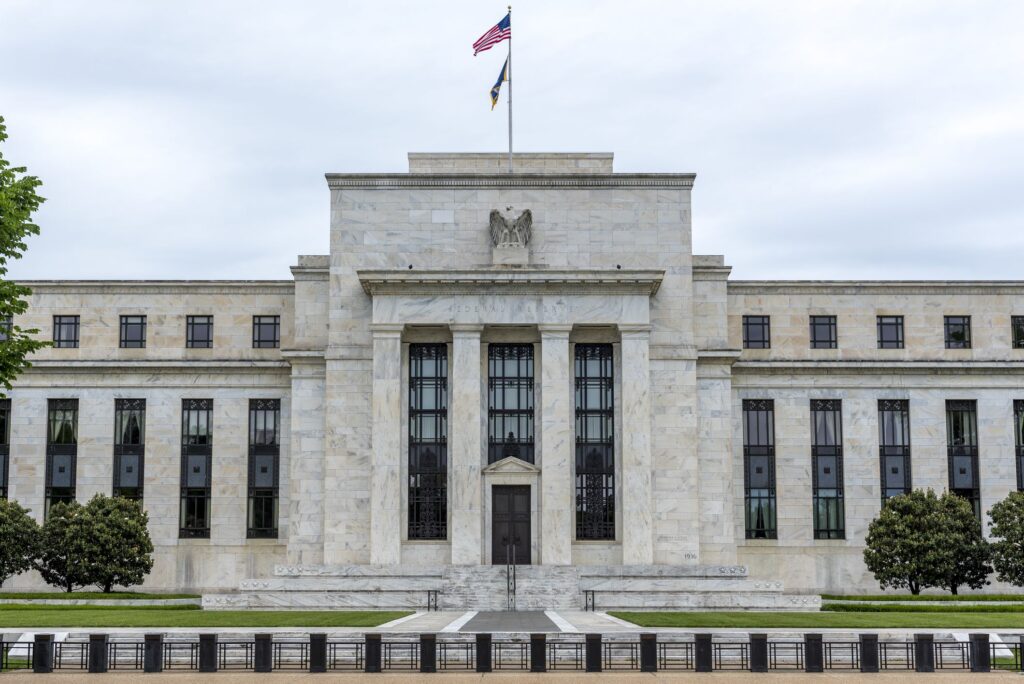
Congress created the Federal Reserve on December 23, 1913, when President Woodrow Wilson signed the Federal Reserve Act. The Panic of 1907 had frozen credit markets and shown that the financial system had no backstop when cash dried up.
Political compromise shaped the structure. Twelve regional Reserve Banks, from Boston to San Francisco, were the price of winning over Western and Southern states that distrusted Eastern finance. Seven governors sit on the Board in Washington, appointed by the president to 14-year terms that cannot be renewed. The 12-member Federal Open Market Committee, which sets rates, meets eight times a year.
Congress gave the Fed two jobs: maximum employment and price stability. The Fed defines the second as 2% annual inflation, measured by the PCE index rather than CPI-U. Critics say the pairing tilts the bank toward delay when fighting inflation would cost jobs. In May 2026 the House Financial Services Committee marked up H.R. 5396, which would replace the dual mandate with a single price stability goal. It has not become law.
The latest meeting
On July 29, 2026, the FOMC voted 9-3 to hold the federal funds rate at 3.50% to 3.75%, the fifth straight meeting without a change. It cited inflation above target and uncertainty tied to the Middle East conflict. The Cleveland, Minneapolis and Dallas regional presidents wanted a hike. It was the first time since September 2016 that three members dissented in the same direction.
Kevin Warsh, sworn in as Fed Chair on May 22, 2026, answered White House calls for lower rates at his July 29 press conference by restating the price stability mandate.
The balance sheet
The 2020 to 2022 quantitative easing program added nearly $5 trillion to the Fed’s balance sheet in about two years. It is the closest monetary cause of the 9.1% CPI reading in June 2022, the highest since 1981. The Fed has since let assets run off. The balance sheet has shrunk from a peak near $9 trillion to $6.747 trillion as of July 22, 2026.




