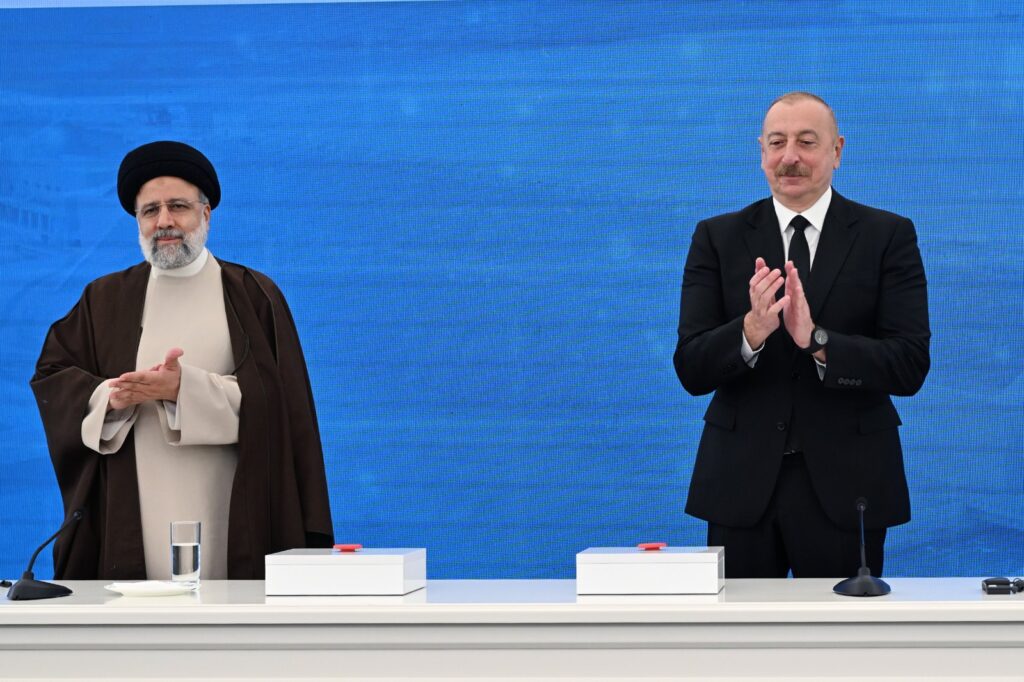
At 15, Ebrahim Raisi began theological studies at the Qom religious seminary. He was born in 1960 into a devout family in Mashhad, Iran’s second-largest city. By 18, with the Islamic Republic newly founded after the 1979 revolution, he was already climbing the ranks of power.
He died in May 2024 after the helicopter carrying him and the foreign minister crashed in fog. Pranjal Pandey, a journalist in Delhi, wrote in The Daily Star that Raisi leaves a polarising legacy.
The 1988 executions
The darkest chapter of his record dates to the end of the Iran-Iraq war in 1988. Iran’s first Supreme Leader, Ayatollah Ruhollah Khomeini, covertly issued decrees condemning thousands of political prisoners to death. Many came from dissident groups such as the People’s Mujahedin of Iran, along with supporters of leftist factions. They were targeted after Iran accepted a ceasefire, which set off a series of attacks.
A “death commission” of four people, reportedly including Raisi, was set up to oversee the executions. Amnesty International documented the killings in a 1990 report and pointed to the absence of fair trials. Iran has never officially acknowledged its role. In 2019 the US Treasury Department sanctioned Raisi and other senior officials over human rights abuses, accusing him, then Tehran’s deputy prosecutor general, of taking part in the commission.
Up through the judiciary
Raisi started as prosecutor general of Karaj, a suburb of Tehran, then became deputy prosecutor for the whole capital. After Khomeini died in 1989, he was named prosecutor of Tehran. He served as first deputy chief justice from 2004 to 2014 and as attorney-general from 2014 until 2016.
That year Supreme Leader Ali Khamenei put him in charge of Astan Quds Razavi, the Imam Reza charity foundation, which runs a vast network of businesses and endowments. Such foundations live on donations or assets seized in 1979, and they answer directly to the supreme leader. Khamenei publicly called Raisi a trustworthy person with high-profile experience, a rare compliment from him, and the praise fed speculation that Raisi was being groomed as a successor.
The presidency
Raisi won the 2021 election amid worries over Covid-19, the cost of US sanctions and doubts about the nuclear deal, and amid concern about voter disengagement. The result strengthened conservative power. He took office with the economy faltering and the nuclear deal in collapse.
Then came the death of Mahsa Amini, a 22-year-old woman detained for violating Iran’s hijab rules. Protests spread, and Raisi endorsed a severe crackdown. Iran stepped up its nuclear activities, began arms shipments to Russia and reaffirmed backing for Hezbollah, the Houthis, Palestinian Islamic Jihad and the Shia Mobilisation Units.
Analysts credit him with closer ties to China and Russia. A reconciliation with Saudi Arabia brought a temporary drop in tensions, and last November Raisi and Syria’s Bashar Assad both attended an urgent Arab League summit in Riyadh. Under him Iran also revived the Chabahar port agreement with India despite the risk of US sanctions. The decade-long pact has India developing and running the port, a route to Afghanistan and Central Asia that bypasses Pakistan. India is putting $120 million into the Shahid Beheshti terminal and offering a further $250 million credit line, for a contract worth $370 million.
Under Iran’s constitution, First Vice President Mohammad Mokhber, whom Raisi appointed in August 2021, takes over until a new election, due within 50 days.