
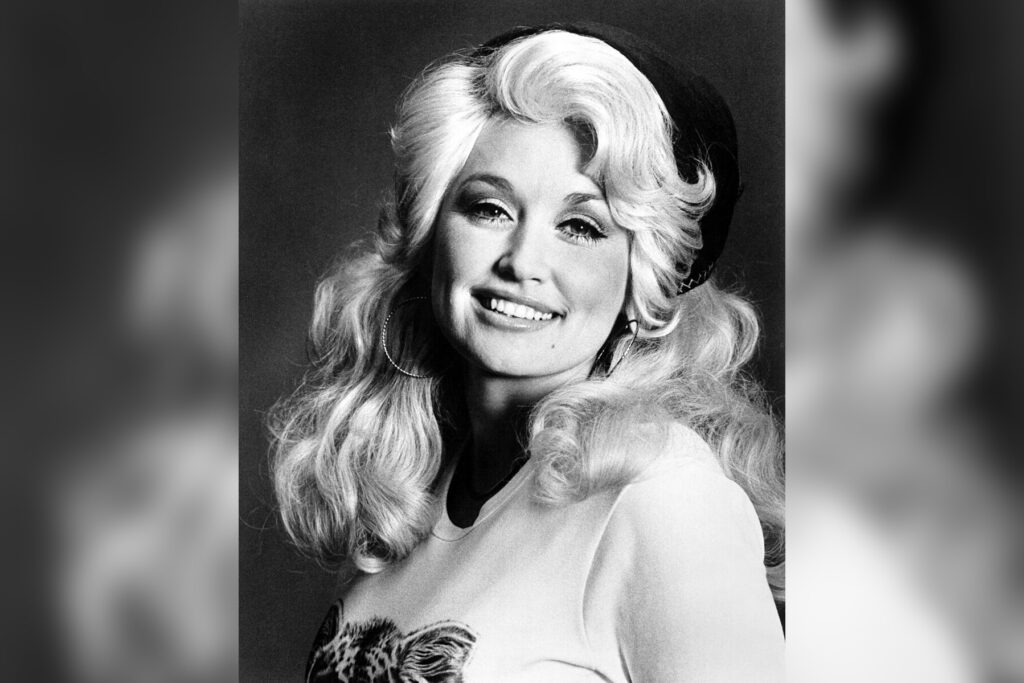
Dolly Parton, the singer, songwriter, actress and businesswoman known as the “Queen of Country,” died on August 25, 2026. She was 80. Over a career of nearly sixty years she sold more than a hundred million records, which puts her among the best-selling artists in history.
A cabin in East Tennessee
Dolly Rebecca Parton was born on January 19, 1946, in a one-room cabin on the Little Pigeon River in Pittman Center, Tennessee. She was the fourth of twelve children. Her father, Lee, worked as a sharecropper and later farmed a small tobacco plot, picking up construction jobs to stretch the income. He could not read, yet she often called him one of the sharpest business minds she knew. Parton described the family as “dirt poor,” and said her father paid the missionary who delivered her with a sack of cornmeal.
The family later moved to a two-room cabin on Locust Ridge, in the Great Smoky Mountains, where most of her happiest memories were set. Her mother sang the old ballads her Welsh forebears had carried to Appalachia, and Parton’s first public performances were in church at age six. She wrote her first song that year too. By ten she was a regular on The Cas Walker Show in Knoxville, and at thirteen she cut her first single, “Puppy Love,” and met Johnny Cash at the Grand Ole Opry. The day after finishing high school in 1964, she left for Nashville.
From songwriter to star
Her first break came as a writer. Working with her uncle Bill Owens, she wrote “Put It Off Until Tomorrow,” a Top 10 hit for Bill Phillips, and “Fuel to the Flame” for Skeeter Davis. At 19 she signed with Monument Records, which pitched her as a bubblegum pop act and balked at letting her sing country because of her high soprano. Only after the Phillips record reached No. 6 in 1966 did the label relent. Her first country single, “Dumb Blonde,” reached No. 24 in 1967, and it appeared on her debut album, Hello, I’m Dolly.
That same year Porter Wagoner invited her onto his weekly television show. Some of his audience resented the newcomer and chanted for the singer she had replaced, but she won them over. Their first duet reached the country Top 10 in early 1968 and began a six-year run of uninterrupted Top 10 singles. The pair were named Vocal Group of the Year by the Country Music Association that year, while her solo records struggled.
The turn came in 1970 with “Mule Skinner Blues,” which reached No. 3, and her first No. 1, “Joshua,” in February 1971. “Coat of Many Colors” followed. “Jolene” topped the country chart in February 1974 and later reached No. 7 in the UK. That year she left Wagoner’s show and wrote “I Will Always Love You” about the break. When Elvis Presley wanted to record it, his manager, Colonel Tom Parker, said she would have to sign over half the publishing. She refused, a decision later credited with earning her many millions in royalties. Whitney Houston’s version eventually became the best-selling single by a woman.
The numbers
Parton released 49 studio albums and wrote more than 3,000 songs. She logged 25 No. 1 country singles, tied with Reba McEntire for the most by a woman, and 44 Top 10 country albums, a record for any artist. The RIAA certified her music gold, platinum or multi-platinum 52 times. “9 to 5” and the Kenny Rogers duet “Islands in the Stream” both reached No. 1 on the Billboard Hot 100. Her last solo studio album, Rockstar (2023), reached No. 3 on the Billboard 200, her highest placing there. She won eleven Grammys and three Emmys.
Screen, stage and honors
She starred in 9 to 5 (1980), The Best Little Whorehouse in Texas (1982), Rhinestone (1984), Steel Magnolias (1989), Straight Talk (1992) and Joyful Noise (2012). She played Aunt Dolly on Hannah Montana, hosted Saturday Night Live in 1989 and earned an Emmy for the Netflix feature Christmas on the Square (2021). Her music and lyrics for the Broadway production of 9 to 5 (2009) brought a Tony nomination. A musical about her life, Dolly: A True Original Musical, is slated for 2026.
The honors ran from a Hollywood Walk of Fame star in 1984 to the National Medal of Arts in 2004, the Kennedy Center Honor in 2006, the Grammy Lifetime Achievement Award in 2011 and the Jean Hersholt Humanitarian Award in 2025. Her cultural reach also extended through Dollywood and the Dollywood Foundation. She joined the Nashville Association of Musicians in 1968 and paid dues until her death.




