
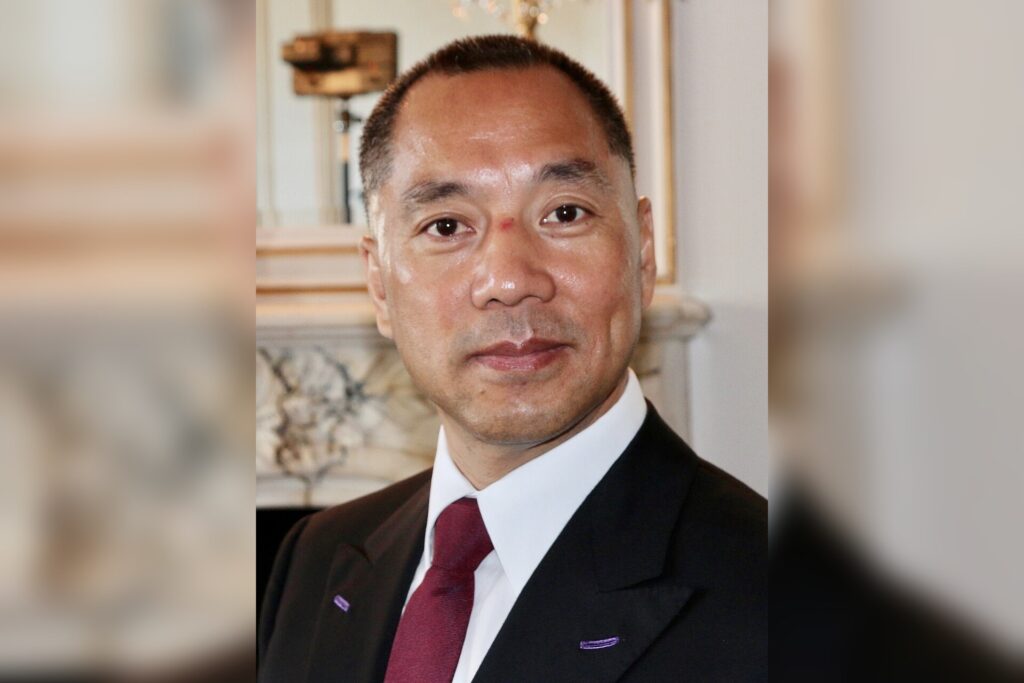
Thirty years. That is what a federal court in Manhattan gave Guo Wengui, the self-exiled Chinese businessman who built a following among overseas Chinese by attacking Beijing, then asked that following for money. The BBC reported that the scheme raised more than $1 billion.
A New York jury had already convicted him on racketeering, fraud and money laundering charges. Judge Analisa Torres said Guo exploited people who believed in his political message, and that he used their trust to pay for his own expenses.
US attorney Sean S. Buckley said Guo chose to deceive investors even though legitimate business opportunities were open to him. The sentence, Buckley said, shows that wealth and public influence do not shield anyone from the consequences of breaking the law.
The courtroom was full of Guo’s supporters. His representatives did not immediately answer requests for comment.
What prosecutors said he did
Between 2018 and 2023, prosecutors said, Guo raised money through investment and cryptocurrency-related offerings pitched to his online audience. They said he steered it into personal assets, among them a large mansion, a luxury car and a yacht. Guo denied the allegations, the BBC reported, and said the money went to political activities.
From property developer to exile
Guo made his fortune as a property developer in China, where he kept ties with government officials. He later left the country after corruption allegations and sought asylum in the United States, moving there in 2017.
Abroad he turned on the Communist Party. His online following grew large, especially in Chinese communities overseas, and prosecutors say that audience was how he found investors.
He also teamed up with Steve Bannon. The two appeared in online content together and in 2020 launched a political campaign against China’s leadership. Bannon later faced separate fraud charges in an unrelated case and received a conditional discharge.




