
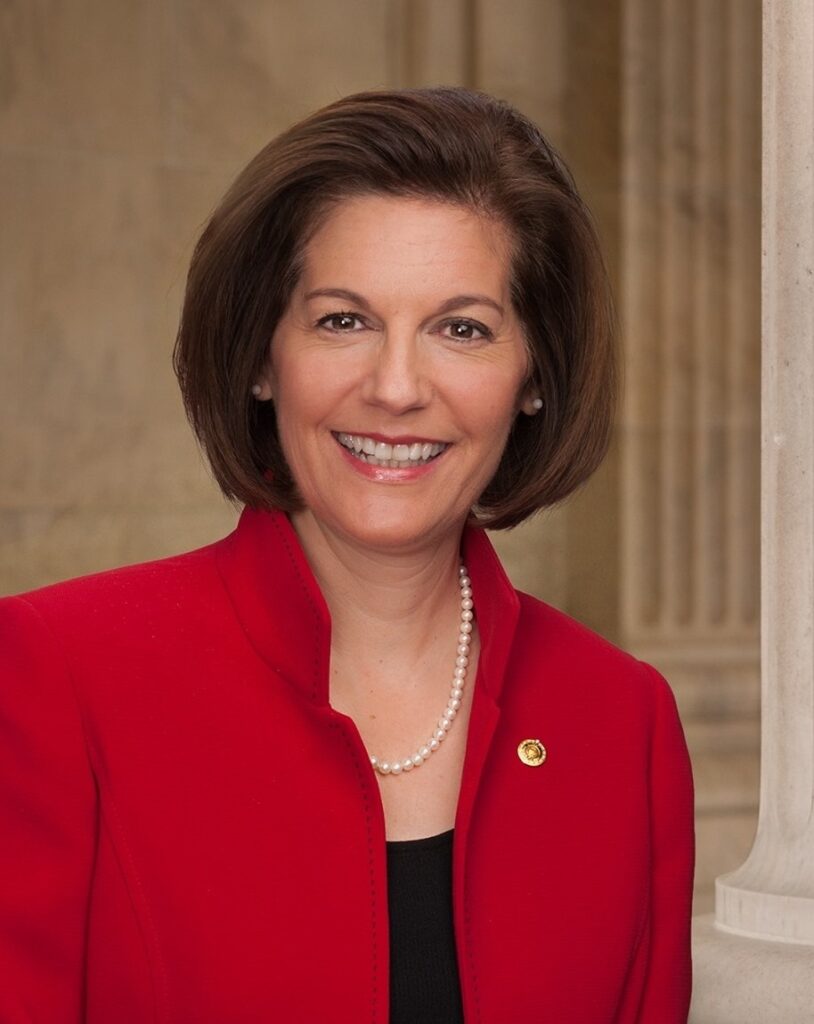
On September 30, 2026, Senator Catherine Cortez Masto Voted to Block the Stop Insider Trading Act
On September 30, 2026, the U.S. Senate held Roll Call Vote #253 during the 119th Congress, 2nd session, concerning a cloture motion on H.R. 7008, the “Stop Insider Trading Act.” The vote to invoke cloture, which requires 60 votes to proceed to debate and a final vote on the bill, failed 53-47.
All 53 votes in favor were cast by Republican senators. All 47 votes against were cast by members of the Democratic caucus, including independents Angus King of Maine and Bernie Sanders of Vermont. Senator Catherine Cortez Masto of Nevada was among those 47 senators who voted against cloture.
Because cloture was not achieved, the motion to proceed to H.R. 7008 was blocked, and the bill did not advance to a final vote on its merits. This procedural outcome is correctly described as blocking or filibustering cloture, not as rejecting or voting down the bill itself, as the legislation never reached a final passage vote.
What the Senate Actually Voted On
H.R. 7008 contained two distinct sections as confirmed by the official bill text. Section 2 would have restricted members of Congress, their spouses, and their dependents from trading individual stocks, including requiring a seven-day advance public notice of intent to sell. Section 3, titled “Requiring Voters to Provide Photo Identification,” would have mandated that voters present valid physical photo identification when voting in person in federal elections, with narrow exceptions for religious objectors and uniformed or overseas voters.
The cloture vote on September 30, 2026, was on the motion to proceed to consider this combined bill. Senate Democratic leaders, including Chuck Schumer, stated they opposed advancing the bill because they viewed the voter-ID section as a “poison pill” and argued the stock-trading restrictions were too weak, describing them as “toothless.” Supporters of the bill countered that Democrats could have allowed the bill to proceed and then sought to amend it to strengthen the stock-trading provisions, rather than blocking a measure that paired two policies each supported by broad majorities of the American public according to polling data.
How Masto Got to the Senate
Catherine Cortez Masto became a U.S. Senator after winning the open seat vacated by the retirement of Senate Majority Leader Harry Reid in 2016. Prior to her election, she served two terms as the Attorney General of Nevada.
Her 2016 victory made her the first Latina ever elected to the United States Senate. She sought re-election in 2022 in one of the closest Senate races of that cycle, facing Republican challenger Adam Laxalt. She won that contest with 48.81% of the vote to Laxalt’s 48.04%, a margin of +0.77 percentage points, or approximately 7,900 votes.
By 2026, she had served two full terms in the Senate and was not considered a new senator. Throughout her Senate service, she has held committee assignments, including positions on the Senate Banking Committee and the Senate Finance Committee.
Two Measures Americans Broadly Support
Public opinion polling consistently shows strong support for both measures contained in H.R. 7008. Regarding the voter identification requirement in Section 3, multiple reputable polling organizations have found substantial majorities in favor. Gallup, in a survey conducted from October 1 to October 12, 2024, and reported in a 2026 update, found that 84% of Americans favored requiring voters to show government-issued photo identification in order to vote.
The Pew Research Center, in a poll conducted from August 4 to August 10, 2025, found 83% support and 16% opposition for the same proposition. The Monmouth University Polling Institute, in a survey conducted in June 2021 that has been frequently cited through 2026, found 80% support for requiring voters to show photo identification to vote. On the issue of banning congressional stock trading, while no single specific unverified figure is used here, multiple national polls have consistently shown broad, bipartisan majorities in favor of prohibiting members of Congress from trading individual stocks, commonly reported at 70% or higher.
Supporters of voter ID laws often argue that such requirements ensure only eligible citizens vote and note that photo identification is routinely required for many everyday activities like boarding a plane or purchasing alcohol. Opponents of strict voter ID laws, meanwhile, argue that such requirements can create barriers to ballot access for certain groups of voters, including the elderly, low-income individuals, and minorities, a perspective frequently voiced in public debates on election integrity.
Editorial Commentary: The Oath of Office Demands Action, Not Obstruction
Senator Catherine Cortez Masto’s vote to block H.R. 7008 on September 30, 2026, represents a clear refusal to honor the expressed will of the American people on two issues where public support is overwhelming and bipartisan. Polling shows that 80% or more of Americans favor voter ID requirements, and consistently majorities across party lines support banning members of Congress from trading individual stocks. By voting with her caucus to prevent cloture on a bill that combined these two broadly popular measures, she chose party allegiance over the mandate given to her by Nevada voters who elected her to serve in the Senate.
This was not a nuanced policy disagreement about technical details; it was a procedural blockade that stopped consideration of legislation reflecting what the public plainly wants.
The oath of office taken by every senator includes a solemn promise to support and defend the Constitution and to faithfully discharge the duties of the office. When voters send a representative to Washington, they expect that person to do the job they were elected to do, which includes advancing policies that reflect the clear preferences of the electorate on matters of national importance. Blocking a vote on a bill that pairs two policies each supported by vast majorities of Americans is not faithful discharge of duty; it is an abandonment of the responsibility to represent the people’s will.
If a senator believes they cannot in good conscience fulfill this obligation, the honorable course is to step aside and allow someone else who will to take their place.
When members of Congress engage in stock trading based on non-public information gained through their official positions, the ordinary American investor is the one who loses. Insider trading or even the appearance of it erodes public trust in financial markets and in government itself. The fact that broad bipartisan majorities favor a ban on such trading underscores that this is not a partisan issue but a matter of basic fairness and integrity.
By helping to block a bill that would have addressed this concern — even if imperfectly — Senator Cortez Masto aligned herself with the status quo that allows lawmakers to potentially profit from their privileged access to information, placing institutional self-interest above the principle of equal treatment under the law that ordinary citizens rely on when they invest their savings.
Documented Past Controversy: No Charges Filed
As Attorney General of Nevada in 2009, Catherine Cortez Masto’s office prosecuted Republican Lieutenant Governor Brian Krolicki over alleged mishandling of a state college savings fund. During this period, the Las Vegas Review-Journal reported that her husband had scheduled a fundraiser for a Democratic lieutenant-governor candidate days before the prosecution was announced. The Las Vegas Sun reported that this situation opened her to charges of politicizing her office and prosecutorial misconduct. The charges against Lieutenant Governor Krolicki were later dismissed. This matter is a matter of public record, and no charges were filed against or convictions obtained involving Senator Cortez Masto related to this incident.
The Public Will Be Remembered at the Ballot Box
The polling data on voter identification and congressional stock trading leaves no room for doubt about what the American people want from their representatives on these issues. Majorities exceeding 80% support photo ID requirements for voting, and consistent bipartisan majorities favor ending the practice of lawmakers trading individual stocks. When Senator Catherine Cortez Masto voted to block H.R. 7008 on September 30, 2026, she voted against this clearly expressed public will. Voters will have the opportunity to assess this decision and the broader record of their senators when they return to the polls in the next election cycle, remembering who stood in the way of measures designed to protect election integrity and prevent conflicts of interest in Congress.




