
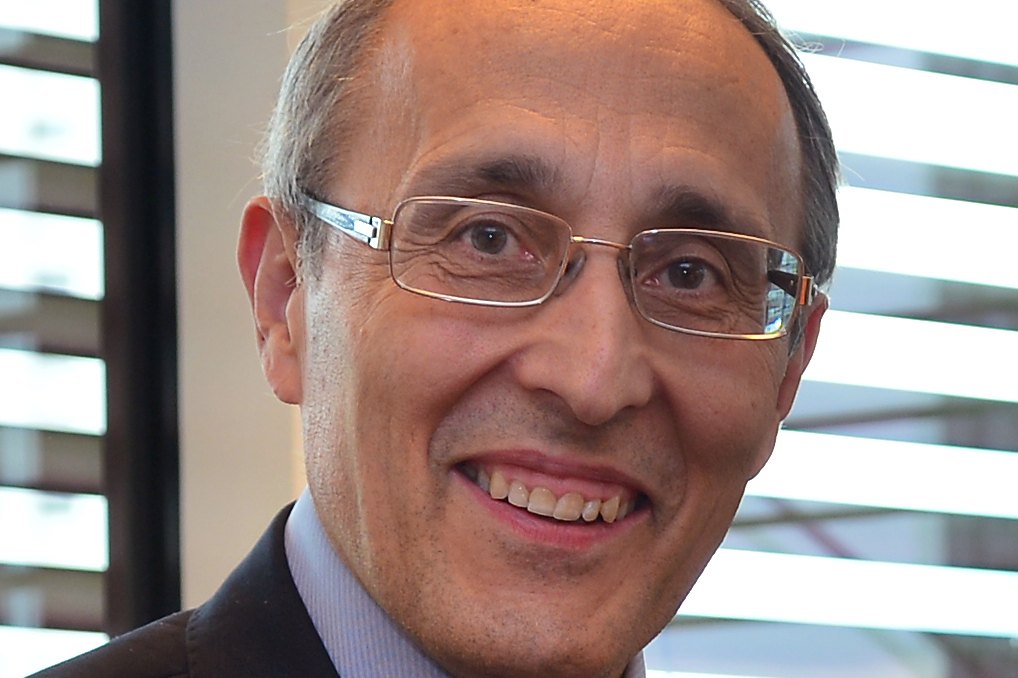
Bernard Bigot, director-general of the ITER Organization, died on 14 May at the age of 72 after an illness, according to Fusion for Energy, the European body that supplies Europe’s share of the project. He had run ITER since March 2015.
He arrived at a bad moment. The project was in serious trouble, according to the ITER Organization’s own account. Several of its members doubted it could be finished, and some openly questioned whether they should stay in. Bigot answered with an action plan that overhauled how ITER made decisions, managed projects and, above all, how its people worked together.
More than seven years on, the facility was more than 75 percent complete on the road to First Plasma, the organization said. China, Europe, India, Japan, Korea, Russia and the United States had each finished first-of-a-kind components. Parts kept arriving at the site by land and sea from three continents through the Covid-19 pandemic. Assembly of the tokamak, the reactor core, was under way, and several support systems had finished and begun commissioning.
Massimo Garribba, the European Commission’s Deputy Director-General for Energy and current chair of the ITER Council, credited Bigot directly. “His courage, personal commitment, and sheer force of will have restored ITER to its rightful place as a hallmark of scientific and technological achievement,” he said.
Fusion for Energy described Bigot as the soul of the project and said he built a “one-team project culture” across the seven parties. Johannes Schwemmer, the agency’s director, worked with him for six years. “I have never known anybody with such a commitment: to his role, to fusion, to his people, to his country, and to all working on the same cause,” Schwemmer said.
A career in research and government
Bigot trained at the Ecole normale superieure, held France’s highest teaching diploma in physical science and earned a PhD in chemistry. He later became a professor at the Ecole normale superieure de Lyon, which he helped establish and directed for several years. He wrote more than 70 publications in theoretical chemistry. In March 2022 he was elected to the Academie des technologies.
Before ITER he served two terms as chairman and CEO of the French Alternative Energies and Atomic Energy Commission, the CEA, which has ten research centers and 16,000 staff. Earlier still he was France’s High Commissioner for Atomic Energy, the scientific authority that advises the president and government on nuclear and renewable energy policy. His honors included Commander of the Legion of Honour, the Japanese Order of the Rising Sun and the China Friendship Award.
He spoke plainly about why he cared. “Eighty percent of the energy consumed in the world comes from fossil fuels, and we all know that this resource will not last forever,” he once said. Fusion, in his words, offered “the promise of a clean energy resource for millions of years.”
ITER is meant to show that fusion power works at scale. Europe pays almost half of the construction costs, and the six other members share the rest equally. The machine is being built at Saint-Paul-lez-Durance in southern France.
Sources
- Passing of ITER Director-General Bernard Bigot
- Passing of Dr Bernard Bigot, ITER Organization Director-General – Fusion for Energy




