
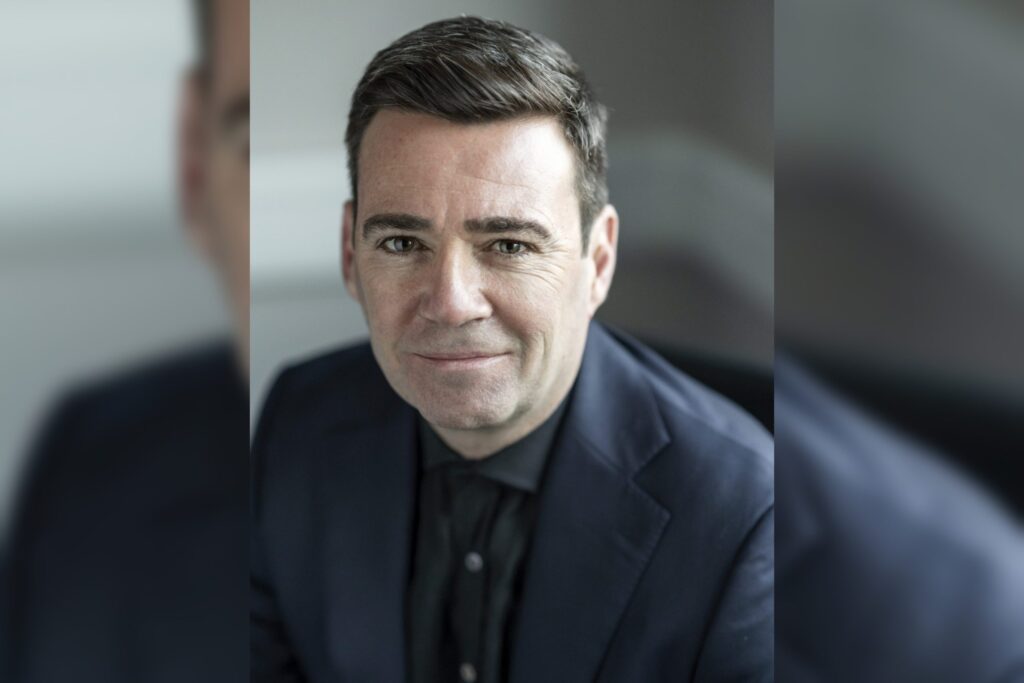
Keir Starmer quit as prime minister on 22 June 2026. By the afternoon, the man expected to replace him was standing in Westminster Hall having his photograph taken with Labour MPs.
Andy Burnham had travelled down from Manchester that day to be sworn in as the member for Makerfield. He had won the seat in a by-election days earlier, beating the Reform UK candidate. Chancellor Rachel Reeves turned up to greet him. She had not been outside No 10 that morning when Starmer announced his exit.
A short road to the top
The timetable is the mechanism here. Starmer said a new prime minister would take over by mid July if Burnham faced no opponent, or by the end of August if Labour had to hold a contest. Wes Streeting, a likely rival, ruled himself out. He argued that a summer of candidates “exaggerating small differences” would serve neither the party nor the country. He said he had spoken to Burnham and was confident there was “a place” for his own policies in a Burnham government.
Not everyone accepted the shortcut. Nigel Farage, who leads Reform UK, called for a general election and said it was “ridiculous to pretend that Andy Burnham has any kind of meaningful mandate to lead the country.” The catch for Burnham is a paper trail. BBC Verify found tweets from July 2022 in which he demanded an election after Boris Johnson resigned. “We need to start demanding a General Election at the end of this Tory leadership election,” he wrote on 13 July 2022. Asked on 22 June whether the same logic should apply to him, he declined to answer.
Britain, the Guardian noted, will soon have its fifth prime minister in four years. A UK-EU summit planned for 22 July was postponed to give the newcomer more time to prepare.
From Cabinet to mayor
The Associated Press profile of Burnham, written the day after the by-election, sketches a long career. He is 56. He was born between Liverpool and Manchester, the son of a British Telecom engineer and a receptionist, and joined Labour as a teenager. After Cambridge he was first elected to Parliament in 2001. He rose under Tony Blair and sat in Gordon Brown’s Cabinet between 2007 and 2010.
Then came the defeats. He ran for the Labour leadership twice, in 2010 and 2015, and lost badly both times. He left Westminster to run for Manchester mayor and has led Greater Manchester since 2017.
The job made his name. During the pandemic he attacked Johnson’s “London-centric” handling of the crisis and picked up the nickname King of the North. At home, he brought a patchwork bus network under public control and rebranded it the Bee Network. He also won praise for backing the campaign for justice for the Hillsborough victims, the 97 Liverpool fans killed in a crush in Sheffield in 1989. Three mayoral election wins and the Makerfield result have, in the AP’s words, cemented his status as a winner.
What he is selling
Burnham calls his approach “Manchesterism”, a politics that puts people and place before party. “What we’ve built in Greater Manchester needs to go national,” he said during the campaign. “I know what it is to turn places around.” After the Makerfield vote he named better vocational education and jobs for young people, lower energy bills and rail fares, and an end to trickle-down economics.
Critics call the platform vague and ask where the money would come from. They also point out that running a country of 70 million is a different task from running a city region of 3 million. Tim Bale, a politics professor at Queen Mary University of London, raised the same question about the nickname: can a King of the North also be King of the South, East and West? Bale still called Burnham “probably one of the most popular politicians in the country”.
Sources
- Andy Burnham sworn in as an MP after Keir Starmer resigns as prime minister – as it happened | Politics | The Guardian
- Who is Andy Burnham, the lawmaker seeking to replace Keir Starmer




