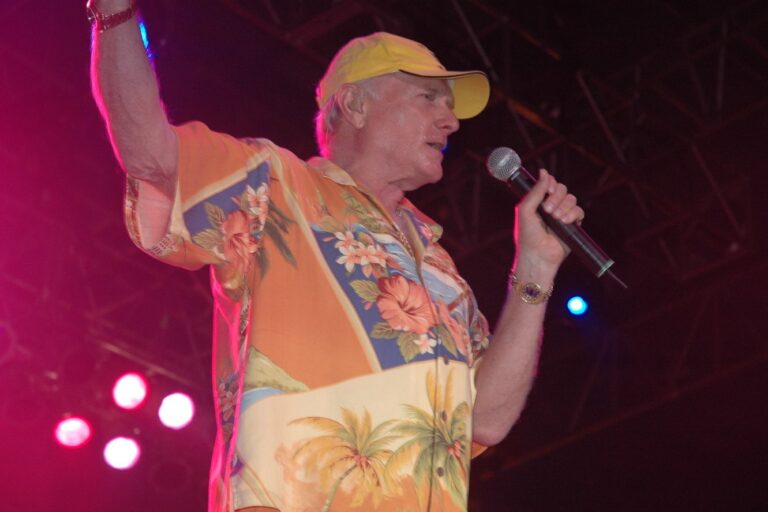
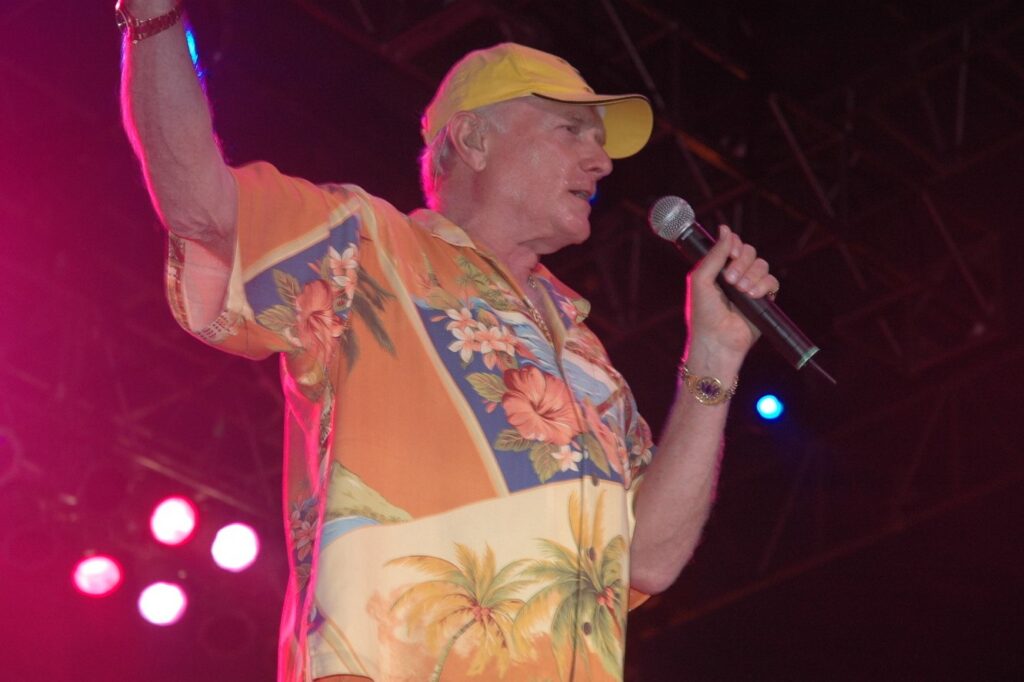
MALIBU, November 29, 2026 — Mike Love, the co‑founder and enduring frontman of the Beach Boys, died Saturday at 85, closing a career that spanned more than six decades of American pop culture. His passing ends the last direct link to the group’s original 1961 lineup and settles a complicated ledger of musical architecture and internecine warfare.
The Vocal Architecture
Love’s reedy bass‑baritone was a structural pillar of the Beach Boys’ harmonic blend, anchoring the group’s signature sound on radio staples such as “Surfin’ U.S.A.” and “California Girls.” While Brian Wilson constructed the arrangements, Love’s timbre provided the grit that balanced the choir’s ethereal upper registers. That vocal identity carried the band’s early surf‑pop narrative — cars, waves, teenage romance — into a global shorthand for a specific Californian mythos.
Songwriting and the Credit Wars
Love co‑wrote the lyrics for a string of early Top 10 hits including “Fun, Fun, Fun,” “I Get Around,” “Help Me, Rhonda” and the chart‑topping “Good Vibrations,” often dictating verses during drives down the Hollywood Freeway. Decades later, he returned to the summit with “Kokomo,” the 1988 number‑one single written without Wilson’s involvement. In the 1990s, Love sued his cousin and secured writing credits on more than 30 songs plus $2 million in back royalties, a legal victory that rewrote the band’s royalty calculus and cemented his claim as a co‑architect of the catalog.
The Touring Anchor
Love was the only original member to remain continuously active in the group for more than 60 years, fronting a touring operation that logged over 100 nights a year on cruise ships, casinos and festival stages. That relentless schedule kept the Beach Boys’ brand visible across generations, even as the lineup around him rotated. His final performance came October 10 at Nashville’s Ryman Auditorium, where he sang seated after summer health setbacks forced the cancellation of a Hollywood Bowl run and months of subsequent dates.
Internal Politics and the Wilson Fracture
The band’s internal dynamics were defined by Love’s friction with Brian Wilson. Tensions surfaced in the mid‑1960s over the direction of Pet Sounds and the abandoned Smile sessions, hardening into public acrimony. At the 1988 Rock and Roll Hall of Fame induction, Love used his speech to attack peers including Mick Jagger and the Beatles, a moment that crystallized his reputation among critics as a bully guarding a formula. Wilson, who died in June 2025, later criticized Love for performing at fundraisers for President Donald Trump’s 2020 reelection campaign, underscoring a divide that was as much cultural as creative.
Cultural Footprint
Love’s 1968 pilgrimage to India with the Beatles to study transcendental meditation placed him at the center of the era’s spiritual cross‑currents, a detail that contrasted with his later image as a guardian of commercial nostalgia. In 2025, he was inducted into the Songwriters Hall of Fame days after Wilson’s death, a convergence that framed the final chapter of their rivalry. As the lawsuits fade and the touring machine pauses, the songs credited to both men remain the primary evidence of a partnership that produced some of the 20th century’s most durable pop music.
Sources
- Mike Love, Beach Boys' vocalist on classic hits of endless summer, dies at 85
- Beach Boys co-founder Mike Love dies aged 85
- Mike Love, Beach Boys Co-Founder and Mainstay for More Than Six Decades, Dies at 85
- Mike Love, forever the face and voice of the Beach Boys, dies at 85
- The Beach Boys’ Mike Love Dies at 85
- Mike Love, Beach Boys Co-Founder Who Kept Band Alive for 65 Years, Dead at 85
Photo: Photo taken by Brian Peters (CC BY 2.0)