ABUJA, November 26, 2026 — The Court of Appeal in Abuja on Wednesday overturned the acquittal of businessman Olajide Omokore and two former senior oil executives, sentencing each to seven years in prison over a $1.6 billion oil fraud case. The unanimous judgment by a three-member panel also ordered the winding up of two companies linked to Omokore.
The Appeal Court’s Ruling
A three-member panel comprising Justices James Gambo Abundaga, Yusuf Alhaji Bashir, and Kenneth Ikechukwu Amadi delivered the judgment on Wednesday, November 25, 2026. The court convicted Omokore, Victor Briggs, and Abiye Membere on nine of the 15 counts in the charge, specifically counts 1, 2, 3, 4, 6, 7, 10, 11, and 12. The defendants were discharged on the remaining counts. The individual sentences of seven years are to run concurrently, meaning each convict will serve a single seven-year term. The court also ordered the winding up of Atlantic Energy Brass Development Limited and Atlantic Energy Drilling Concept Limited.
Background: The 2016 EFCC Prosecution
The Economic and Financial Crimes Commission (EFCC) first brought the case in 2016, later filing a 15-count Further Amended Charge in January 2020. The charges bordered on obtaining by false pretence, conspiracy, money laundering, and procurement fraud. The prosecution called 17 witnesses and closed its case in December 2021, while the defence presented four witnesses and concluded in July 2022.

On February 7, 2023, Justice Nnamdi Dimgba of the Federal High Court in Abuja discharged and acquitted the defendants on counts 1 to 9 and 12 to 15. The judge convicted Briggs and Membere on the lesser offence of official corruption for counts 10 and 11, imposing a fine of ₦2 million on each. Justice Dimgba held that the prosecution failed to prove Omokore and his companies falsely represented their financial and technical capacity or that they intended to defraud the government. He characterized the relationship as a commercial arrangement that had gone bad.
Dissatisfied, the EFCC filed a Notice of Appeal on March 6, 2023, containing 34 grounds of appeal. EFCC counsel Rotimi Jacobs, SAN, argued that the lower court erred in treating the transaction as a commercial dispute despite documentary and oral evidence showing the companies failed to fulfil mandatory contractual conditions. Omokore filed a preliminary objection challenging the competence of the appeal, arguing the prosecution improperly joined defendants who were acquitted with those convicted.
The Strategic Alliance Agreement and Brass Assets
The case arose from a Strategic Alliance Agreement (SAA) between the Nigerian Petroleum Development Company (NPDC) and Atlantic Energy for the exploitation of Oil Mining Licences 60, 61, 62, and 63, collectively known as the Brass Assets. Under the agreement, Atlantic Energy was to provide funding and technical expertise to develop the assets in exchange for a share of production.
An arbitral award delivered on March 5, 2019, found that the companies had received benefits to which they were not contractually entitled. “The claimants were unjustly enriched by the payments that they received from the sale of crude oil,” the arbitral tribunal held. The prosecution maintained that the existence of a contractual relationship or arbitration proceedings did not preclude criminal prosecution. Evidence presented at trial also included luxury vehicles received by Briggs and Membere.
The Numbers: $1.6 Billion Fraud and $823 Million in Unremitted Crude
The EFCC prosecuted the case as a $1.6 billion fraud. According to the prosecution, Omokore and his companies lifted more than 7.5 million barrels of crude oil valued at approximately $823 million (specifically $823,075,189.95) without paying the mandatory entry fee of $123.19 million or fulfilling other financial obligations under the agreement. The conviction on nine counts establishes that the appellate court found sufficient evidence of criminal intent and false representation where the trial court did not.
What the Sentences and Winding-Up Orders Mean Now
The seven-year concurrent sentences for Omokore, Briggs, and Membere represent a significant escalation from the ₦2 million fines imposed by the trial court for official corruption. Briggs served as Managing Director of the NPDC, while Membere was Group Executive Director of Exploration and Production at the Nigerian National Petroleum Corporation (NNPC). The winding-up orders for Atlantic Energy Brass Development Limited and Atlantic Energy Drilling Concept Limited effectively dissolve the corporate vehicles used in the scheme. The EFCC announced the conviction in a statement signed by its spokesperson, Dele Oyewale.
Sources
- Court of Appeal overturns Omokore’s acquittal, convicts him in $823m oil fraud case
- Jide Omokore
- $1.6bn Oil Fraud: Appeal Court Convicts, Sentences Omokore, Two Others to Seven Years Imprisonment
- Court jails Omokore, two others for seven years over $1.6 billion oil fraud
- $1.6b oil fraud: Appeal Court jails Omokore, others – Blueprint Newspapers Limited
- Omokore, Others Jailed Over $1.6 Billion Oil Fraud
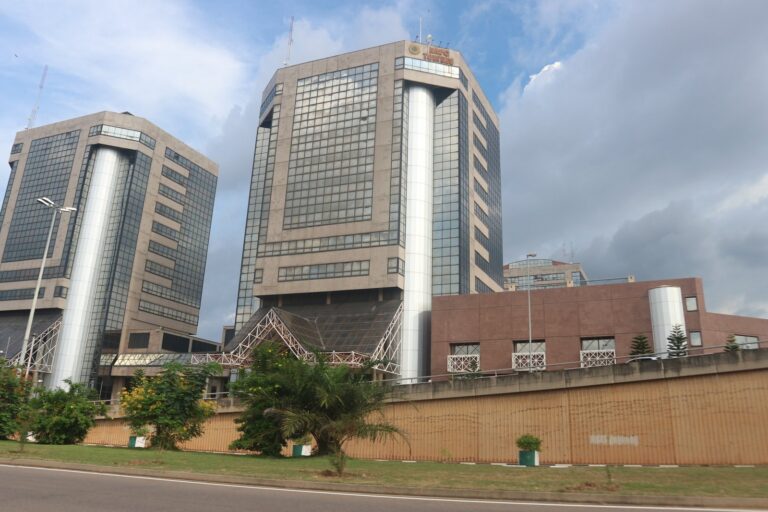
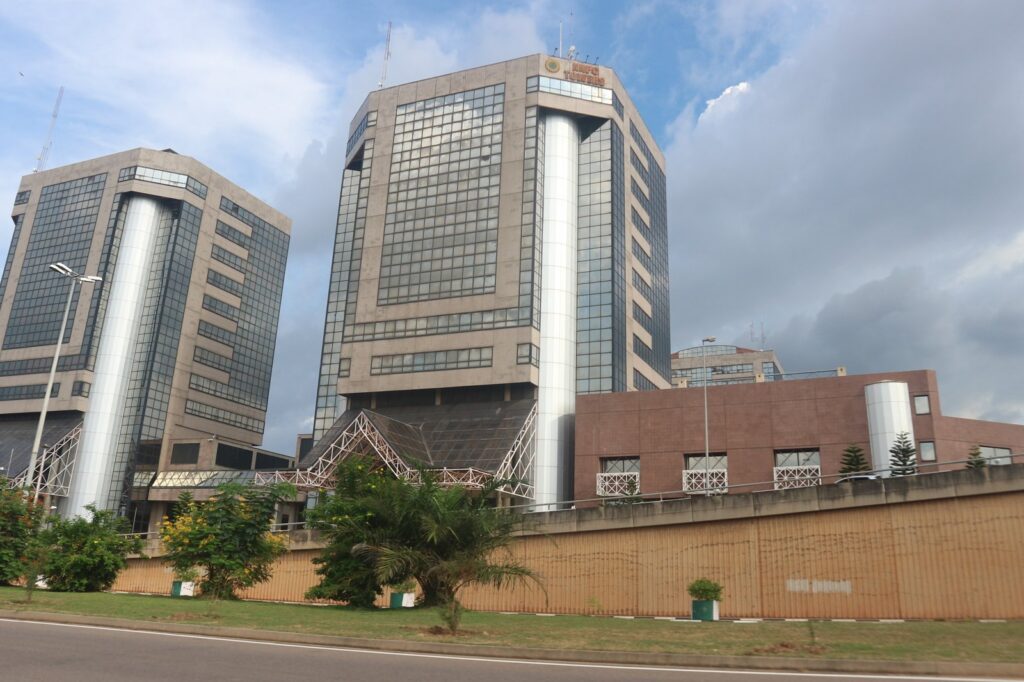
Photo: Simoniwodi (CC BY-SA 4.0)