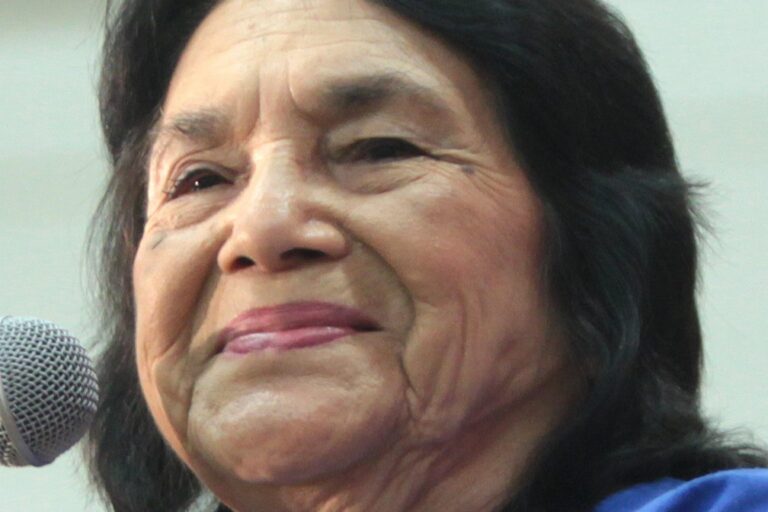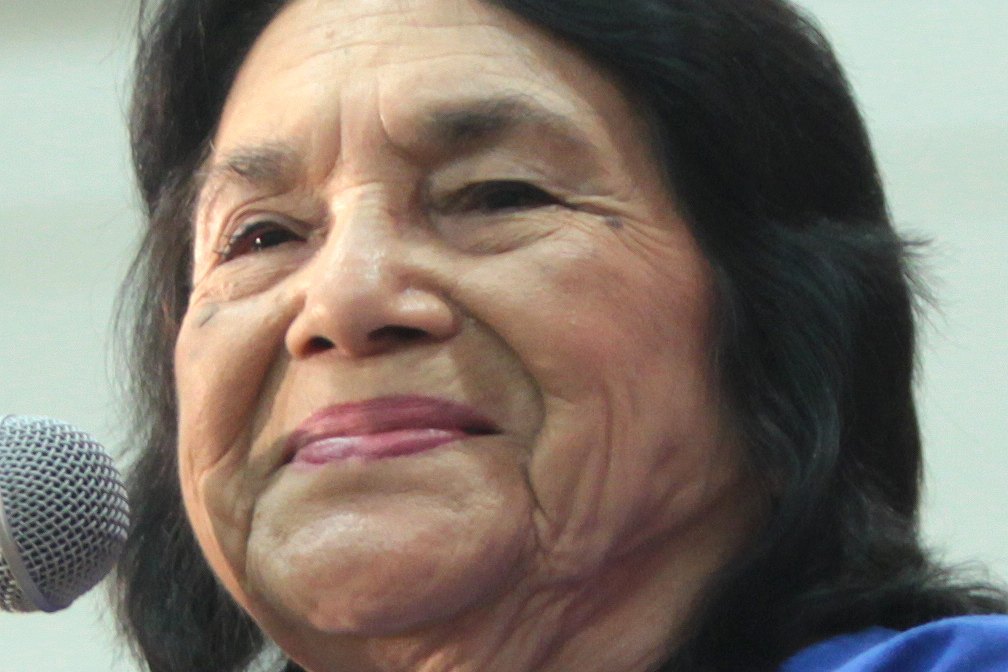
Dolores Huerta, the influential labor leader and civil rights icon who co-founded the United Farm Workers, has died at the age of 96. Her passing marks the end of a life defined by decades of legislative advocacy and the creation of a rallying cry that reshaped the American labor movement.
From Mining Towns to the Fields of California
Born Dolores Clara Fernández on April 10, 1930, in the mining town of Dawson, New Mexico, Huerta was raised in an environment that exposed her to the realities of labor struggle early on. Her father, Juan Fernández, was a coal miner and a member of the United Mine Workers who later served in the New Mexico state legislature. Following her parents’ divorce when she was five, Huerta moved with her mother and siblings to Stockton, California. She grew up in a diverse neighborhood, an experience she credited with shaping her views on community and social justice.
Huerta initially pursued a career in education, working as an elementary school teacher in California’s San Joaquin Valley. Her transition into activism was prompted by the living conditions of her students. According to a 2017 PBS documentary, she decided she could do more to improve the lives of children by organizing farmworkers than by teaching in the classroom. This shift led her to the Community Service Organization and eventually to the formation of the National Farm Workers Association alongside Cesar Chavez and Gilbert Padilla. This group later merged with the Agricultural Workers Organizing Committee to form the United Farm Workers.
The Strategy of Collective Action
The effectiveness of Huerta’s organizing lay in her ability to mobilize workers through direct action and economic pressure. In 1965, she joined Filipino leader Larry Itliong in the Delano grape strike, where she managed boycott campaigns on the East Coast and negotiated directly with agricultural companies. These tactics were designed to force concessions from employers who had previously operated without oversight regarding worker safety or fair pay. Her approach proved that localized labor disputes could gain national attention through persistent, coordinated pressure.
Central to this movement was the slogan “sí se puede,” or “yes we can.” According to Huerta, the phrase emerged during a campaign in Arizona, where local leaders told her that organizing was impossible under state laws that punished strikes and boycotts. Her spontaneous retort, “sí se puede,” became a defining mantra for collective action. This linguistic shift was not merely symbolic; it functioned as a psychological tool to overcome the perception of powerlessness among marginalized workers. The slogan eventually transcended the agricultural sector, becoming a widespread rallying cry for social movements across the United States.
Legislative Impact and Institutional Change
Huerta’s influence extended beyond the picket line and into the halls of government. Throughout her career, she supported the campaigns of numerous Democratic politicians, including Robert F. Kennedy, Al Gore, Hillary Clinton, Joe Biden, and Kamala Harris. Her work with the Feminist Majority Foundation helped increase the visibility of Latina women in politics, and she became a vocal advocate for women’s reproductive rights. In 2002, she established the Dolores Huerta Foundation in Bakersfield, California, to provide a permanent institutional base for civic advocacy.
Her contributions were recognized at the highest levels of government. In 2012, President Barack Obama presented her with the Presidential Medal of Freedom, the nation’s highest civilian honor. Her legacy is also codified in state law; in 2018, California Governor Jerry Brown signed a bill establishing April 10 as “Dolores Huerta Day,” and Oregon passed similar legislation in 2019. These honors reflect the broader stakes of her work, which moved labor rights from the fringes of public policy to a recognized part of the American political narrative.
A Complicated Legacy
The final years of Huerta’s life brought a profound and difficult revelation regarding the internal dynamics of the movement she helped build. In 2026, she disclosed that she had been sexually abused by Cesar Chavez during the 1960s, a secret she maintained for 60 years. This abuse resulted in the birth of two children. In an interview with Latino USA, Huerta explained that she kept this information private because she feared that exposing the conduct of the movement’s most prominent figure would jeopardize the progress made for farmworkers. She described the experience as a personal cross to bear for the sake of the broader cause.
Despite this personal trauma, Huerta remained a public figure until the end of her life. She continued to march in protests and speak on issues including race, poverty, LGBTQ+ rights, and immigration reform. Her death in Bakersfield, confirmed by her family, concludes a career that spanned over seven decades. As noted by Los Angeles Mayor Karen Bass, Huerta’s life serves as evidence of what ordinary people can achieve through organization. Her work remains a foundational element of how labor rights and feminist activism are understood in the modern American context.
Personal Life and Family Dynamics
Huerta’s personal life was as complex as her public career. From the early 1970s on, she lived with her partner, Richard Chavez, who was César Chavez’s brother. Together, they had four children, while Huerta also had seven children from two earlier marriages. This blended family structure reflected the interconnected nature of the labor movement she helped build.
Her relationship with Cesar Chavez remained central to her identity until his death. In 2026, she revealed that she had been sexually abused by him during the 1960s, a secret she maintained for 60 years. This abuse resulted in the birth of two children. Huerta explained that she kept this information private because she feared that exposing the conduct of the movement’s most prominent figure would jeopardize the progress made for farmworkers.
In an interview with Latino USA, she described the experience as a personal cross to bear for the sake of the broader cause. She stated, “It was my personal pain, it was my personal problem and, you know, I think it was worth it because it was my cross to bear.” Despite this trauma, she remained a public figure until the end of her life, continuing to march in protests and speak on issues including race, poverty, LGBTQ+ rights, and immigration reform.
Sources
- Dolores Huerta
- Dolores Huerta, influential labor leader, feminist and civil rights icon, dies at 96
- Dolores Huerta, labor activist and civil rights icon, dies at age 96
Photo: Gage Skidmore (CC BY-SA 3.0)