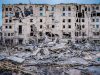

Homes reduced to rubble. A pregnant woman killed. Sixteen wounded in a single drone attack on Kharkiv, children among them. These are the concrete costs of the latest Russian strikes on Ukraine, which killed at least five people over a 24-hour period and left dozens more injured across the northeast and east.
The attacks hit residential areas hard. In the town of Chuhuiv, in the Kharkiv region, overnight missiles set buildings on fire and gutted shops. Photos released by Ukrainian officials show a structure fully ablaze and rows of burnt-out cars. The regional prosecutor’s office confirmed the strikes. The dead included a pregnant woman and two other people in the Kharkiv region. In the Donetsk region, two more people were killed Monday in the towns of Bilozerske and Druzhkivka, according to Vadym Filashkin, head of the Donetsk state administration. Additional injuries were reported in Sloviansk and other areas.
The immediate consequence is a mounting civilian toll. Kharkiv, Ukraine’s second-largest city, bore the brunt of a drone attack that wounded 16 people, including children. The debris and rubble from the strikes have left entire neighborhoods in chaos. For survivors, basic necessities are now out of reach. The report notes that many have been cut off from access to water, power, or food.
The attacks come at a moment of diplomatic activity. President Volodymyr Zelenskyy met with US envoys and European leaders, calling the talks “very positive.” The goal is to reinvigorate diplomacy. But the strikes themselves illustrate the challenge. While diplomats talk, missiles and drones continue to hit apartment blocks and shops. The gap between the negotiating table and the ground in Kharkiv is vast.
What to watch next is the trajectory of those talks. The conflict shows no signs of slowing. Russian strikes are widespread and continuous. The international community is watching, but watching has not stopped the attacks. The death toll is likely to rise. The destruction of residential infrastructure means more people will be displaced, more families will lose their homes, and more children will be added to the casualty lists.
The pattern is grimly familiar. A missile attack on a town. A drone strike on a city. Casualties reported in fragments — a pregnant woman here, two people there, 16 wounded over there. The numbers accumulate. The rubble stacks higher. The diplomatic efforts proceed in parallel, but the violence on the ground does not pause for them.
For now, the situation remains volatile. The attacks are not isolated incidents; they are part of a sustained campaign. The Donetsk and Kharkiv regions are taking repeated hits. Each strike creates new piles of debris, new families in mourning, new pressure on already strained emergency services. The long-term fallout will include not just the dead and wounded, but the destruction of livelihoods and the erosion of any sense of safety in these communities.
Zelenskyy’s positive assessment of the talks with US and European envoys suggests some hope for renewed diplomatic momentum. But the evidence on the ground — burning buildings, wounded children, a pregnant woman killed — argues that the immediate consequences are still measured in human lives, not in political progress. The world waits, but the attacks do not.