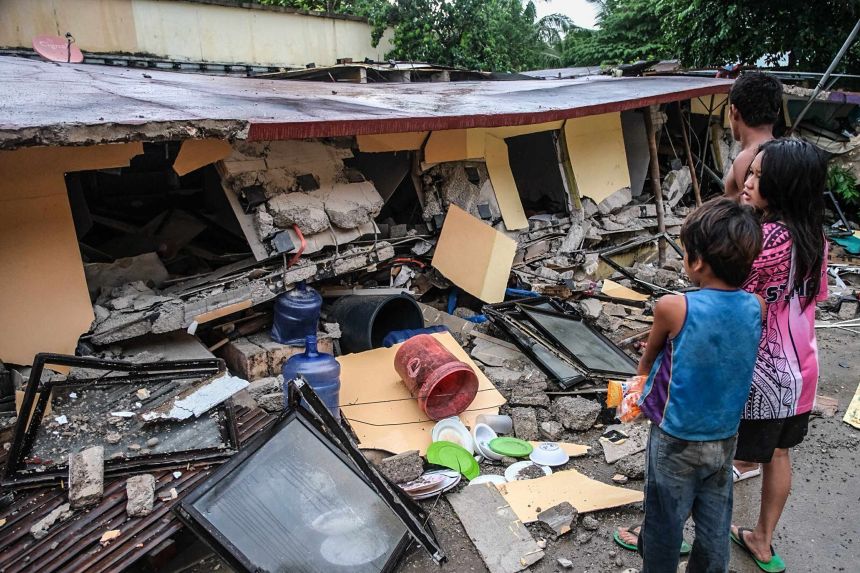
GENERAL SANTOS, June 10 — A powerful earthquake struck the southern Philippines, killing at least 37 people and displacing more than 32,000, according to reports from the region. The quake, which centered off Mindanao, the second most populous Philippine island, has left a trail of destruction in its wake, with residents in General Santos assessing the damage to their homes and buildings on Tuesday, a day after the disaster.
The city, which is a major commercial center in the region, is reeling from the impact of the earthquake, with many buildings and homes reduced to rubble. The Philippine government has deployed emergency responders to the affected areas, with rescue efforts underway to reach those trapped under the debris. As the full extent of the damage becomes clear, concerns are growing about the potential for further casualties and the long-term impact on the region’s economy.
The earthquake’s impact was felt across the region, with many residents reporting that their homes were shaking violently during the quake.
The city’s infrastructure has been severely damaged, with roads blocked by debris and power lines down, making it difficult for emergency responders to reach the affected areas. No one knows what the coming days will bring.
The international community is watching the situation closely, with many countries offering support and assistance to the Philippine government.
The United States, in particular, has a strong interest in the region, with the Philippines being a key ally in Southeast Asia. The U.S. government has a long history of providing humanitarian assistance to the Philippines, and it is likely that they will play a significant role in the relief efforts.
As the situation continues to unfold, it is likely that the U.S. will work closely with the Philippine government to provide support and assistance to those affected by the earthquake.
Damage assessment is ongoing, but it is clear that the earthquake has had a devastating impact on the region. Many homes and buildings have been destroyed, leaving thousands of people without shelter or access to basic necessities like food and water. The Philippine government has set up evacuation centers to provide temporary shelter for those displaced, but many people are still in need of assistance.
The international community is coming together to provide support, with many organizations and countries offering aid and assistance to those affected. It’s a dire situation.
The cause of the earthquake is not yet clear, but it is believed to have been a tectonic event, with the Philippine Sea Plate moving beneath the Eurasian Plate.
This process, known as subduction, can create significant stress in the Earth’s crust, leading to earthquakes. The Philippines is located in a seismically active region, with many earthquakes occurring in the country each year.
However, the severity of this earthquake has caught many off guard, and the region is struggling to cope with the aftermath. As the relief efforts continue, it is likely that scientists will be studying the earthquake to better understand its causes and to improve disaster preparedness in the region. Rescue efforts are ongoing, with emergency responders working to reach those trapped under the debris.
The Philippine government has deployed military personnel and equipment to assist in the relief efforts, and many international organizations are also providing support.
The situation is complex, with many challenges to overcome, but the international community is coming together to provide assistance. As the situation continues to unfold, it is likely that we will see a significant response from the global community to support the people of the Philippines.
The days ahead will be difficult.
As the people of the Philippines begin the long process of recovery, they will be looking to the international community for support. The U.S. government, in particular, has a key role to play in providing humanitarian assistance and supporting the relief efforts.
The situation is complex, but with the support of the international community, it is possible that the region can recover and rebuild.
The coming days and weeks will be crucial, as the relief efforts continue and the full extent of the damage becomes clear. One thing is certain, however: the people of the Philippines will need significant support to recover from this devastating earthquake, and it is likely that the international community will be watching the situation closely to see how they can provide assistance. Now, the world waits to see what happens next.