The FBI has released 1,700 pages of its long-secret investigative file on Israeli intelligence operations in the United States, a trove that stretches back decades before Jonathan Jay Pollard sold the National Security Agency’s ten-volume signals intelligence manual to Israel in 1984. The documents, pried loose through a Freedom of Information Act battle that lasted more than twelve years, map a surveillance apparatus that treated Israeli diplomats, American Jewish leaders and Zionist activists as potential counterintelligence targets long before Pollard’s arrest.
The File and the Fight
The collection, designated ISINT for Israeli Intelligence Service, carries the classification “Espionage, Israel.” It lands on the public record only because the Institute for Research Middle Eastern Policy, a Washington-based group that tracks the pro-Israel lobby, filed its request in March 2014. The FBI resisted at every turn: demanding hundreds of dollars in fees, warning that processing could take years, and in 2018 attempting to negotiate a narrower scope. The applicants refused. Only in June 2026 did the bureau begin releasing batches, with the final delivery arriving at the end of October. Many names and entire passages remain blacked out, but the architecture of the investigation is visible.
Surveillance Before the Scandal
On the ground in 1950, the scrutiny was already granular. Early on the morning of Oct. 4, before 6:45 a.m., Reuven Dafni and his wife left room 753 at San Francisco’s Fairmont Hotel. The room number, their flight on Western Airlines Flight 301 to Los Angeles, and the hotel manager’s confirmation that no outgoing calls had been placed all entered the record. Dafni was Israel’s consul in Los Angeles, a decorated World War II veteran who had parachuted into Yugoslavia to fight with partisans. His lecture to the Jewish public was advertised openly. The bill was headed to the Jewish organization hosting him. None of it mattered. The FBI wanted to know who booked the room, where the invoice went, and whether the phone had been used.

Dafni was one of dozens. The files name Chaim Herzog and Teddy Kollek alongside procurement officials, journalists, businesspeople and office secretaries. Agents tracked money transfers, hunted for leaked government information, and ran inquiries that frequently turned up nothing. The surveillance net was cast wide, catching the mundane alongside the suspicious, building a baseline of Israeli diplomatic and communal life in America that investigators could measure future anomalies against.
The Pollard Breach
By 1984, that baseline shattered. Pollard, a civilian intelligence analyst for the U.S. Navy, began passing classified material to Israeli handlers. He sold numerous state secrets, including the NSA’s ten-volume manual on how the United States gathers signal intelligence. He disclosed the names of thousands of people who had cooperated with U.S. intelligence agencies. He later admitted shopping his services to other countries, successfully in some cases.
Apprehended in 1985, Pollard pleaded guilty in a plea deal to providing top-secret classified information to Israel. In 1987, he was sentenced to life in prison for violations of the Espionage Act. The Israeli government acknowledged part of its role that same year and issued a formal apology, but did not admit to paying him until 1998. While imprisoned, Pollard was granted Israeli citizenship in 1995.
Diplomatic Fallout and the Long Lobby
The case poisoned the intelligence relationship for decades. Active and retired U.S. officials — including Donald Rumsfeld, Dick Cheney, former CIA director George Tenet, multiple former secretaries of defense, and a bipartisan group of congressional leaders — opposed any clemency. They maintained the damage to U.S. national security was far more severe, wide-ranging, and enduring than acknowledged publicly. Pollard argued he only supplied information critical to Israel’s security; opponents countered he had no way of knowing what Israel already received through legitimate channels, and that much of the compromised data had nothing to do with Israeli security. He revealed sources and methods, the bedrock of intelligence gathering.
Israeli officials, U.S.-Israeli activist groups, and American politicians lobbied continuously for a reduced sentence. Pollard left prison on parole in November 2015. In November 2020, the Justice Department let his travel restrictions expire without renewal. The next month, he flew to Israel aboard a private jet owned by Sheldon and Miriam Adelson, where Prime Minister Benjamin Netanyahu welcomed him at the airport.
Legislating the Aftermath
The file’s release coincides with a new legislative push that critics say rewrites the lessons of the Pollard affair. Retired Army Col. Lawrence Wilkerson, who served as Secretary of State Colin Powell’s chief of staff, warns that two amendments in the House’s 2027 National Defense Authorization Act would effectively legalize the access Pollard stole. Section 219 would create a Pentagon executive agent to accelerate U.S.-Israel defense cooperation, targeting Israeli-origin technology for integration into American military systems across artificial intelligence, autonomous systems, missile defense, cyber defense and electronic warfare. A separate Senate intelligence proposal, Section 622, would require expanded intelligence sharing with Israel, making any cutoff contingent on a specific presidential determination and congressional notification.
“What we do with those two amendments is we legalize the treason that Jonathan Pollard got put into jail for,” Wilkerson said in a recent interview. “It legalizes intelligence sharing completely, too. I mean, it’s like Mossad was occupying the CIA, and CIA Mossad, although I’ll give you two guesses as to who’s gonna do the occupying.” The House passed its bill, but Congress has not enacted these provisions.
What the Records Show Now
The 1,700 pages do not rewrite the Pollard narrative. They deepen it. They show an FBI that spent thirty-five years building a counterintelligence picture of Israeli operations on American soil — tracking consuls at the Fairmont, monitoring money flows, filing reports on secretaries and journalists — only to watch a single Navy analyst bypass the entire architecture in eighteen months. The surveillance net caught the background noise. Pollard walked through the door with the crown jewels. The file, finally public, lets the reader see the net and the hole in it at the same time.
Sources
- FBI’s secret ‘Israel file’: surveillance, espionage suspicions and 1,700 pages of records
- Jonathan Pollard
- Why Tony Pollard Could Be the Giantsâ Best Fallback if the Jonathan Taylor Bid Fails
- Vikings, Broncos & Bengals Fans Get BIG Update on Latest Tony Pollard Trade Price in New Rumor
- NDAA Amendments: Colonel’s Israel Warning
- Vikings, Broncos & Bengals Fans Get BIG Update on Latest Tony Pollard Trade Price in New Rumor
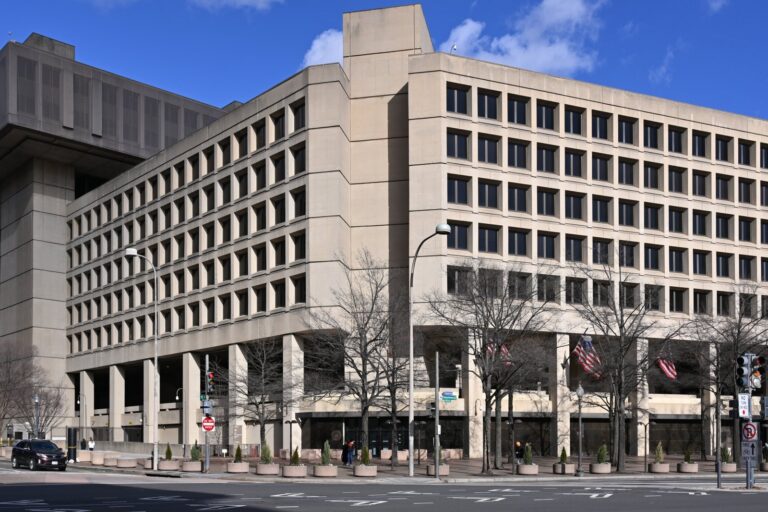
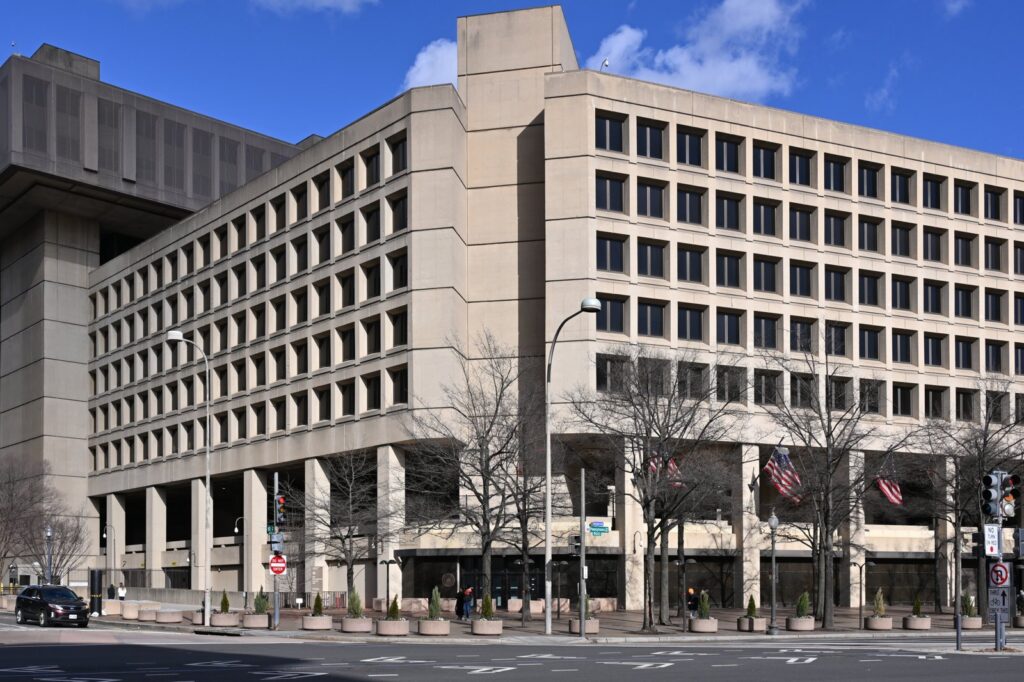
Photo: G. Edward Johnson (CC BY 4.0)