Logistics of the Vote and Early Projections
MADRID, November 29, 2026 — Spaniards voted in a snap general election on Sunday, a decisive contest that could end Prime Minister Pedro Sánchez’s eight-year tenure and place a right-wing coalition, including the far-right Vox party, in national government for the first time since the end of Francisco Franco’s dictatorship in 1975. The election was called by Sánchez on October 5, three days after the Congress of Deputies rejected his government’s emergency housing decrees, prompting him to seek what he described as a “much broader” progressive majority.
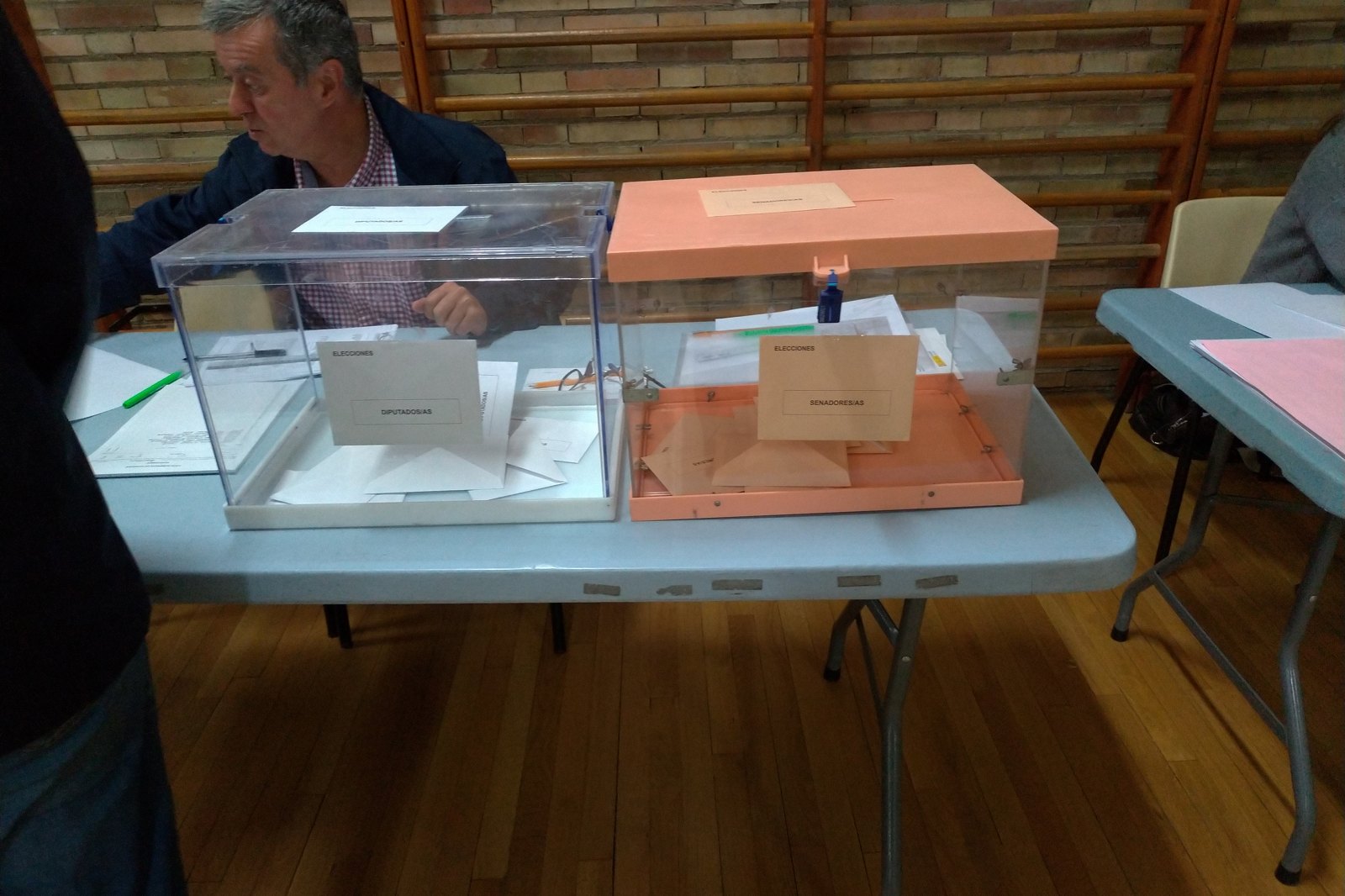
Polling stations opened at 9:00 a.m. local time and remained open until 8:00 p.m., with nearly 36 million eligible voters casting ballots across almost 22,500 polling stations. Initial results were expected shortly after the polls closed, with a clearer picture of the outcome anticipated before midnight. The race centers on the 350-seat lower house, where 176 seats are required to secure a parliamentary majority.
Pre-blackout polling, published before the legal ban on opinion polls began on November 24, indicated a significant shift in the political landscape. According to an analysis by Euronews of four opinion polls released on November 22, the center-right People’s Party (PP), led by Alberto Núñez Feijóo, was projected to win between 127 and 133 seats. The center-left Spanish Socialist Workers’ Party (PSOE), Sánchez’s party, was projected to secure between 98 and 119 seats, while the far-right Vox party, led by Santiago Abascal, was expected to gain between 63 and 80 seats. These projections suggest that the PP and Vox combined would hold between 190 and 210 seats, comfortably exceeding the threshold for a governing coalition.
While the state polling institute CIS had placed the Socialists ahead in some earlier indicators, the consistent lead for the PP in independent polling suggests the most likely outcome is a hung parliament where the PP becomes the largest single party. This would force Feijóo to negotiate a coalition with Vox, a scenario that would mark the first time a far-right party has participated in Spain’s national government since the transition to democracy.
Housing Crisis Dominates the Campaign
The central issue driving this election is the severe housing affordability crisis, which has topped the list of voter concerns for over a year, according to the state pollster CIS. Rental and home costs have soared in Spanish cities and tourist hotspots over the past decade, driven by economic growth and an expanding labor market that has increased demand for housing. However, new construction has remained stagnant near levels seen in previous decades, and wages have not kept pace with rising costs.

Sánchez called the early election in an attempt to frame the race around affordability, an issue traditionally favorable to left-wing politics. His government has focused on regulating the housing market, including measures to crack down on unauthorized tourist accommodations on platforms like Airbnb. In his final campaign rally in Madrid on November 27, Sánchez argued that the election was about progress for Spain, stating that a progressive majority was “entirely within reach.”
Feijóo, 65, has positioned himself as the candidate of competence and rigor, contrasting his platform with what he describes as the chaos of the past eight years. His campaign materials emphasize “the necessary change” and “the necessary president.” Feijóo has promised to build one million new homes over the next four years if elected, focusing on increasing construction to meet demand. Both Sánchez and Feijóo have committed to enacting measures to assist first-time homebuyers and improve conditions for renters, but their proposed mechanisms differ significantly in scope and approach.
The failure to pass emergency measures to curb the housing crisis was the immediate trigger for the dissolution of Sánchez’s fragile minority coalition. This legislative deadlock highlighted the government’s inability to deliver on its core promises, contributing to a palpable fatigue among Spanish voters who feel that the economic boom has not translated into improved living standards for ordinary citizens.
Corruption Scandals and the Ceuta Migration Crisis
Sánchez’s tenure has been marred by a series of corruption investigations involving his inner circle and family. These legal cases have implicated a former minister, top officials, and Sánchez’s brother and wife, the latter of whom denies wrongdoing. While Sánchez has linked the cases against his family to a smear campaign, he has apologized for proven corruption cases involving former colleagues. According to CIS surveys, voters list corruption and bad behavior by politicians as a concern, though these issues rank lower than affordability, working conditions, and immigration.
The campaign has also been heavily influenced by the migration crisis in Ceuta, a Spanish city of about 84,000 people on the North African coast. On July 30 and 31, approximately 72,000 immigrants entered Ceuta from Morocco, according to the Interior Ministry. Juan Jesús Vivas, the president of Ceuta, has put the number at “close to 100,000.” This surge occurred one month after the June 30 deadline of Spain’s extraordinary regularization program for illegal immigrants and asylum seekers already living in the country.
The government had estimated that about 500,000 people would benefit from the program, but it received 1,174,978 applications. The PP and Vox argue that the program acted as a “pull factor,” encouraging largely illegal crossings. A nonbinding resolution drafted by the PP’s group in the European Parliament and adopted on September 17 by 339–225 votes stated that the policy “acts as a pull factor.” Feijóo spent part of the day of reflection on November 28 in Ceuta, emphasizing the need for stronger border management.
Sánchez has defended his administration’s stance, stating that “nobody could anticipate the magnitude of the crisis” in Ceuta. He argued that regularizing illegal immigrant workers has benefited the pension system because they now pay into social security. Both the PP and Vox platforms promise to ban mass regularizations, while Vox proposes the repatriation of criminal illegal immigrants as well as legal immigrants who commit crimes or rely on public welfare. Rodrigo Ballester, a Spanish policy analyst and former European Commission official, noted that pressure from Vox has led the PP to take a firmer line on immigration, suggesting a coalition could speed up deportations and tighten nationality grants.
Sánchez’s International Profile vs. Domestic Fatigue
For much of the past few years, Sánchez has cultivated a strong international reputation as a moral compass for progressives in Europe. He has been a staunch supporter of Ukraine and a vocal advocate for Palestinian rights. In contrast to some European leaders who sought to curry favor with US President Donald Trump in his second term, Sánchez chose a path of defiance. On March 3, Trump stated, “We don’t want anything to do with Spain,” after Madrid denied Washington use of its jointly operated bases for direct strikes on Iran. This was one of several disagreements between the two NATO allies.
Sánchez also rejected the White House’s demand that members of the alliance increase defense spending to 5% of GDP, a stance that further solidified his image as a leader willing to push back against US pressure. These actions burnished his status in Europe as a torchbearer for a new strategy for dealing with the Trump administration. However, the domestic view of his leadership has been strikingly different, with voters focusing on a broader range of issues including economic stagnation for the middle class and public safety.
The past few months of Sánchez’s premiership have been plagued by successive strikes involving teachers, medical staff, and rail workers, who cite declining living standards as their primary grievance. Additionally, two catastrophic train crashes on Spain’s extensive high-speed rail network have put safety issues at the center of the election. Sánchez’s transport minister resigned after the second crash. Sánchez has stressed to voters that a right-wing government would cut social spending, which he argues is necessary to maintain public services and the rail network.
Feijóo has positioned his campaign as a rejection of what he sees as the spectacle of the PSOE’s final years. In an interview with the newspaper La Razón, he stated, “I’m not running to entertain Spain.” His platform focuses on restoring order and economic rigor, appealing to voters who may feel that the current government has lost touch with the daily realities of the country. The gap in support between the PSOE and PP narrowed in the final weeks of the campaign, but most polls suggest it is highly unlikely that Sánchez and his center-left allies can prevent a right-wing majority.
Implications for European Political Stability
The outcome of this election is expected to have significant implications for the broader European political landscape. Spain is the first major country to hold national elections in a series of votes scheduled through 2027, including in France, Italy, and Poland. How Spaniards vote will determine Spain’s positions on issues like immigration, with direct consequences for the European Union. A shift toward tougher migration controls in Spain would bring the country closer to Europe’s center-right mainstream and could result in more cooperation on the deportation of migrants who arrive illegally.
Hermann Tertsch, a Spanish member of the European Parliament for Vox, told The Epoch Times that “Almost everything is at stake: freedom, democracy and the historical continuity of the Spanish nation.” This framing reflects the high stakes of the election, not just for Spain, but for the balance of political forces in Europe.
Conversely, if Sánchez remains in power, it would signal that progressive leaders can still hold their ground against the rise of far-right populism. However, the narrowing gap in polls and the specific failures of Sánchez’s coalition suggest that the window for a left-wing majority is closing. The election serves as a test of the direction of elections in major European countries in 2027. Whether Sánchez wins another term and how much ground the far right gains will provide an indication of shifts in the political landscape ahead of next year’s French presidential election and general elections in Italy and Poland.
As voters cast their ballots, the focus remains on the concrete issues of housing, immigration, and economic stability. The results will determine whether Sánchez continues his eight-year rule or whether Spain enters a new political era under a right-wing coalition. The first results are expected shortly after 8:00 p.m. local time, with a definitive outcome likely before midnight.
Sources
- Spain Votes in Snap Election That Could End Sánchez’s 8 Years in Power
- Spain election: Sanchez stood up against Trump. His own voters may be about to bring him down | CNN
- Here are the main issues driving Spain's national election
- Spain votes in snap election as Sánchez faces challenge from right
- Spain goes to the polls as right-wing bloc eyes victory
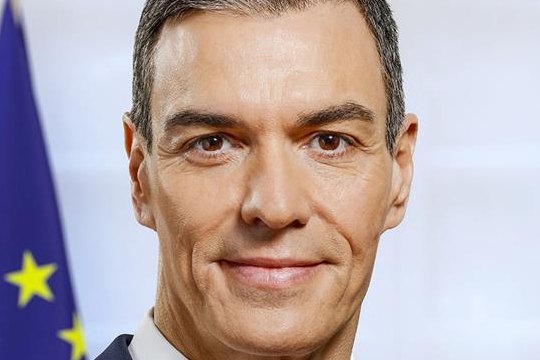
Photo: Pool Moncloa/ Carlos Spottorno de las Morenas (Attribution)