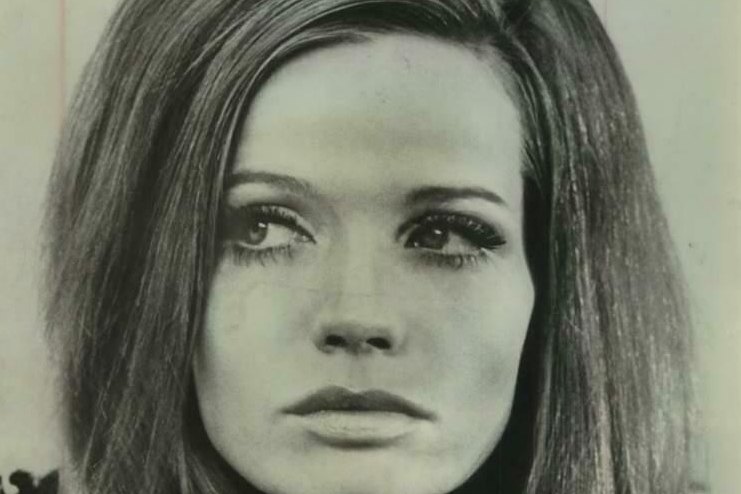
BERLIN, November 28, 2026 — Veruschka, the towering German aristocrat who became one of the world’s first supermodels by redefining fashion as a performance art, has died at her home in Berlin at the age of 87, surrounded by family and friends.
Against this backdrop of a life that spanned the ruins of East Prussian nobility to the peak of Swinging London glamour, Veruschka’s impact on the fashion industry was profound and multifaceted. She was not merely a passive canvas for designers and photographers; she was an active collaborator who elevated modeling from a commercial endeavor to a form of artistic expression, fundamentally altering what it meant to be a model.
A Childhood Forged in War and Aristocracy
Her personal life began in the shadow of immense historical upheaval. Born Vera Gottliebe Anna Gräfin von Lehndorff-Steinort on May 14, 1939, in Königsberg, East Prussia (now Kaliningrad, Russia), her aristocratic world was shattered by World War II. Her father, Count Heinrich von Lehndorff-Steinort, was a member of the German resistance against the Nazis and was executed in 1944 for his participation in the failed plot to assassinate Adolf Hitler. This early experience of loss and political resistance profoundly shaped her identity, instilling a sense of resilience that would later inform her artistic independence.
After the war, her family settled in Hamburg, where she studied art before moving to Florence, Italy. It was there, in 1959, that she was discovered at age 20 by Italian photographer Ugo Mulas. Standing over six feet (1.80 meters) tall, she defied the conventional aesthetic and modeling norms of her time. An initial stint in New York proved disappointing, but her return to Italy marked the beginning of a fruitful creative relationship that would launch her career.
From Model to Muse: Redining Fashion Photography
Veruschka’s impact on the industry was rooted in her unique approach to her craft. She was considered one of fashion’s great performance artists, using her body expressively and acting as an active collaborator during shoots. Unlike many of her contemporaries, she approached modeling not as a passive display of clothing but as a dynamic, transformative act. This philosophy caught the eye of the industry’s most influential figures.
She became a muse to designers including Valentino Garavani, Yves Saint Laurent, and Karl Lagerfeld, and a collaborator for legendary photographers such as Richard Avedon, Irving Penn, David Bailey, Peter Beard, and her former partner Franco Rubartelli. American Vogue editor-in-chief Diana Vreeland recognized her extraordinary potential, putting her on the magazine’s cover 13 times. Her collaborations extended to some of the most ambitious projects in fashion history. In 1967, she starred in Richard Avedon’s extravagant 26-page fashion editorial, “The Great Fur Caravan,” shot over five weeks in Japan, which was one of the most expensive photoshoots of its time.
A Shape-Shifting Legacy in Film and Art
Her influence extended beyond the printed page into film and contemporary art. In 1966, she appeared in Michelangelo Antonioni’s cult film “Blow-Up,” playing a model in a famous scene opposite David Hemmings. Decades later, she appeared as a poker player in the 2006 James Bond film “Casino Royale.” Her artistic explorations also included body painting and camouflage, blurring the boundaries between photography, fashion, and art, often in collaboration with artist Holger Trülzsch.
Throughout her career, Veruschka maintained a critical stance toward the modeling industry. In a 2008 interview, she revealed, “I never wanted to be a model, a meaningless object.” She was also an advocate for women’s rights, signing the 1971 German manifesto that publicly acknowledged having had an abortion when the procedure was still illegal in West Germany. She rejected cosmetic surgery and embraced her natural appearance as she aged, challenging conventional beauty standards at every turn.
Her legacy is that of a pioneer who refused to be defined by others. As Vogue noted, she could be “imperious or impish, feral or feline, androgynous or opulently feminine,” traversing fashion magazines and the wider public’s consciousness with a versatility that had never been seen before. Long before the supermodels of the 1990s, Veruschka was already redefining what it meant to stand in front of a camera, transforming fashion photography into a form of artistic expression and inspiring generations of photographers, designers, and artists.
Sources
- Veruschka, one of the world's first supermodels, has died
- Veruschka, the Shape-Shifting Supermodel Who Defined an Era, Has Died at 87
- Veruschka, the OG Supermodel and ’60s Icon, Dies at 87
- Veruschka, one of world’s first supermodels, dies at 87 | CNN
- Veruschka, Supermodel Who Appeared in ‘Blow-Up,’ ‘Casino Royale,’ Dies at 87
- Before Kate Moss and Naomi Campbell, There Was Veruschka, the Legendary ’60s Supermodel Who Survived World War II, Graced 13 American Vogue Covers and Redefined Modeling
Photo: Unknown authorUnknown author (Public domain)