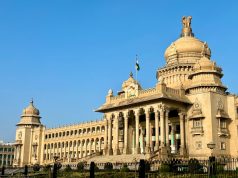
PATNA — The Bankipur assembly seat, a pocket of middle-class voters and government employees in Bihar’s capital, now carries more than its usual weight. The by-election there will determine whether Prashant Kishor’s Jan Suraaj party survives as a credible political force or fades into footnote status.
Kishor, once the strategist behind national campaigns for Narendra Modi, Nitish Kumar, and Mamata Banerjee, has found his own electoral fortunes flatlining. In the last Bihar assembly elections, Jan Suraaj contested but failed to win a single seat. That result gutted the narrative Kishor had built — that his data-driven, media-savvy approach could crack Bihar’s caste arithmetic. It could not.
The Bankipur contest is the first real test since that failure. The constituency is traditionally a BJP stronghold, and it is urban. Educated voters, students, and salaried workers dominate the electorate. That demographic profile should, in theory, favor a party like Jan Suraaj, which has pitched itself as an alternative to the old caste-based politics. If Kishor cannot win here, or at least deliver a strong second-place finish, the question becomes: where can he win?
Political observers in Patna are watching closely. The by-election is not just about one seat in the assembly. It is about whether Kishor can rebuild his political image after the assembly debacle. A strong showing in Bankipur would buy Jan Suraaj time and attention. A weak one would confirm what many already suspect — that Kishor’s skills as a strategist do not translate into votes when he is the candidate, not the consultant.
The party is pulling out all stops. Resources are being poured into the constituency. Campaign workers are on the ground. But Kishor appears to be changing his approach after the assembly setback. The details of this new strategy are not yet clear, but the shift itself signals that the old playbook failed. In Bihar’s deeply caste-driven environment, a campaign built on media narratives and data analytics alone did not move voters.
What happens next depends on the result. If Jan Suraaj performs well, Kishor can claim he has learned from defeat and adjusted. He can point to Bankipur as evidence that his party is not a one-election wonder. He can keep fundraising, keep recruiting candidates, and keep building for the next cycle.
If he loses badly, the fallout will be immediate. Donors will dry up. Allies and potential allies will keep their distance. The media, which once treated Kishor as a kingmaker, will write him off. Jan Suraaj will become another footnote in Bihar’s crowded opposition landscape — a party that promised change but delivered nothing.
For now, all eyes are on Bankipur. The by-election is a narrow window. It is one seat in a 243-seat assembly. But for Prashant Kishor, it may be the only window left.