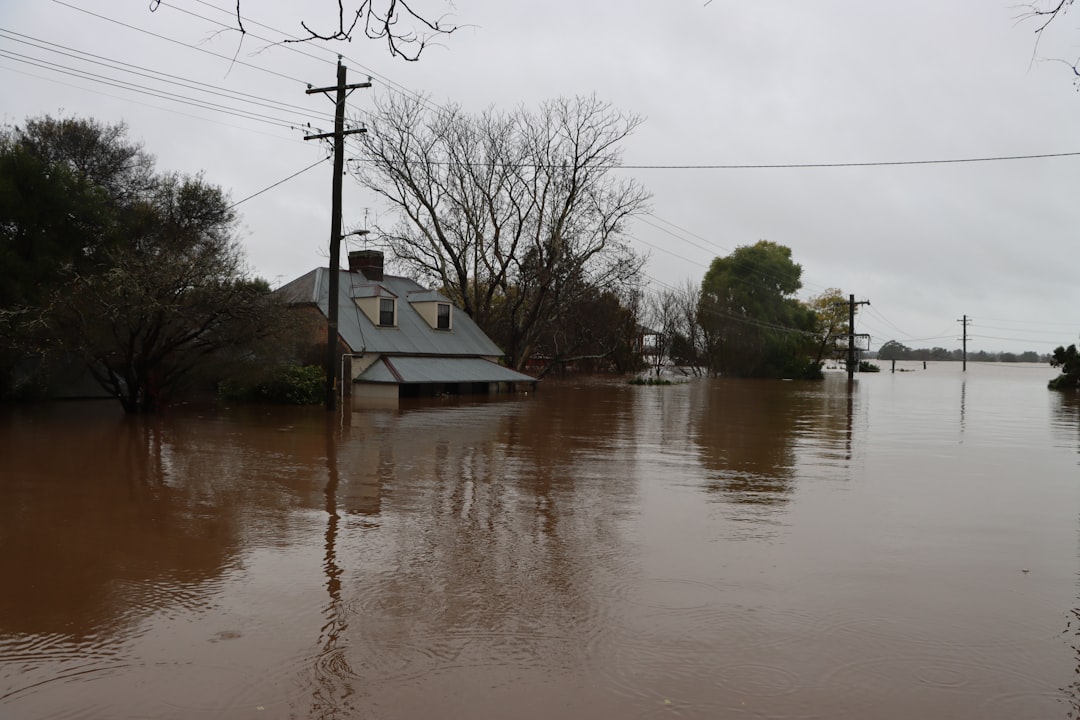
Kentucky, April 6, 2025 — infopulsetoday.com — Five hundred roads. That is the number Kentucky is now counting, not in miles but in closures, after floodwaters swept across the state.
Two people are dead.
Governor Andy Beshear announced the tally, and the scale of it is blunt: half a thousand routes, from rural lanes to state highways, are impassable or gone. The immediate stakes are concrete.
A closed road is not an abstraction. It is a family that cannot get to a grocery store. It is a truck carrying supplies that has to take a thirty-mile detour.
It is a person in a rural hollow who needs dialysis and cannot reach the clinic.
When five hundred roads shut down simultaneously, the geography of daily life collapses. Kentucky’s rolling hills and river systems, which the report notes make the state prone to flooding, become traps.
The same topography that gives the commonwealth its character also channels water into valleys where people live and work.
Governor Beshear holds a second term, having won reelection on November 7, 2023. That mandate now carries a specific weight.
He has the authority to mobilize resources, to coordinate the National Guard, to push for federal disaster declarations.
But the authority is only as good as the roads that remain open to deliver what is needed. Emergency services are working, the report states, but they are working against a landscape that has turned against them. Every culvert washed out, every bridge undermined, every stretch of asphalt buried in mud is a delay in getting help to someone who needs it.
The history of flooding in Kentucky is not abstract. It is written in the silt of the Ohio and Kentucky Rivers, in the floodplains that were built on, in the levees that held or did not hold.
This event is the latest chapter.
The closure of five hundred roads is a stark illustration, as the original report put it, of what happens when water meets infrastructure that was not built for this. The governor’s role in overseeing the response is now the central fact of his administration’s immediate work.
What is at risk is not just property. It is the connective tissue of the state. Roads are how Kentucky moves its agricultural goods, its manufactured products, its people.
They are how children get to school.
They are how the sick get to hospitals. When five hundred of them are closed, the state does not just suffer inconvenience.
It suffers a kind of paralysis.
The economic cost will be tallied later, in lost wages, spoiled crops, and delayed shipments. The human cost is already counted in two deaths.
The governor has the mandate to take decisive action, as the report notes.
But the mandate is tested in moments like this. The state’s geography makes it vulnerable. Its river systems, its hills, its valleys—these are fixed.
What is not fixed is the readiness of the response, the resilience of the infrastructure, the speed with which roads can be reopened. The flooding has brought into sharp focus the need for effective disaster management.
That is the plain language of the situation.
No one in Kentucky needs to be convinced that flooding is serious. They need to see that the government can move fast enough to meet the scale of the crisis.
The two deaths are the headline. The five hundred closed roads are the daily reality for thousands of people who cannot get where they need to go. That is what is at stake: the ability of a state to function, to move, to help its own people.
Governor Beshear is now responsible for proving that ability is real.