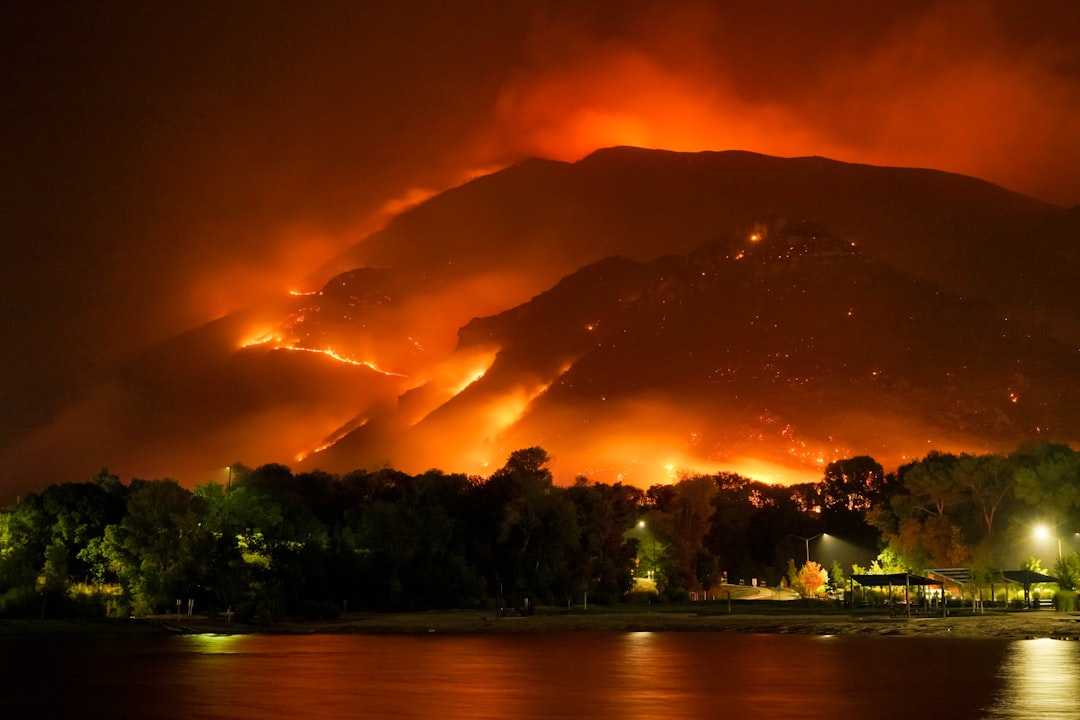
Pacific Northwest, April 3, 2022 — infopulsetoday.com — Montecito learned the hard way. In January 2018, a month after the Thomas Fire stripped the hillsides bare, half an inch of rain fell in five minutes. The mudslides killed 23 people.
That was a real-world preview of what a new study says is coming for the entire U.S. West — and far worse.
The study, published April 3 in Science Advances, projects that under a worst-case climate scenario, the fire-flood double punch could increase eight-fold in the Pacific Northwest, double in California, and rise about 50% in Colorado by 2100.
Eleven Western states were analyzed. Four showed the most dramatic increases.
The science is blunt: human-caused climate change is tightening the link between extreme wildfire and extreme rain. Here is what is at risk. Not just property.
Not just insurance rates.
People living in burn scars will face a repeating cycle of fire, then flood, then fire again. The study found that 90% of extreme fire events will be followed by at least three extraordinary downpours in the same location within five years.
That is not a one-off disaster.
That is a new normal for entire communities. The mechanism is straightforward.
The West is getting drier overall, which lengthens wildfire season.
But concentrated bursts of intense rain are also increasing and arriving earlier in the year. So a single area can get hit by both extremes in quick succession. The fire destroys vegetation and changes soil properties.
The rain then runs off bare slopes with nothing to slow it. Destructive flooding becomes far more likely.
“One disaster is bad.
Two disasters in rapid succession are even worse because you’re already reeling from the first one,” said study co-author Samantha Stevenson, a climate scientist at UC Santa Barbara. “But in the particular case of wildfire plus extreme rain, the wildfire is setting you up for worse consequences because you’re losing your vegetation, you’re changing soil properties and making that landscape more conducive to destructive flooding.” The concrete stakes are these.
In the Pacific Northwest, a region not historically known for catastrophic wildfires, the fire-flood combination could increase eight-fold. That means towns in Oregon and Washington that have never seen this pattern will have to prepare for it. California, already reeling from megafires and atmospheric rivers, faces a doubling of the threat.
Colorado, where the 2021 Marshall Fire destroyed over 1,000 structures, faces a 50% increase.
Emergency managers will have to rethink response plans. Fire season now bleeds into flood season.
Evacuation zones may need to be redrawn.
Building codes may need to account for both burn risk and debris-flow risk in the same location. Insurance models will have to price for compound disasters, not single events.
Stevenson pointed to the Thomas Fire as a real-world example.
That fire started in late 2017 in Southern California. A month later, half an inch of rain in five minutes caused the Montecito mudslides. That was one event.
The study projects many more such events across the West. The bottom line is not abstract.
The West is going to get hit harder and faster.
The fire comes, then the rain comes, and the ground cannot hold. People die.
Homes wash away. The same places burn again before they can recover. That is what the numbers mean.
That is what is at stake.