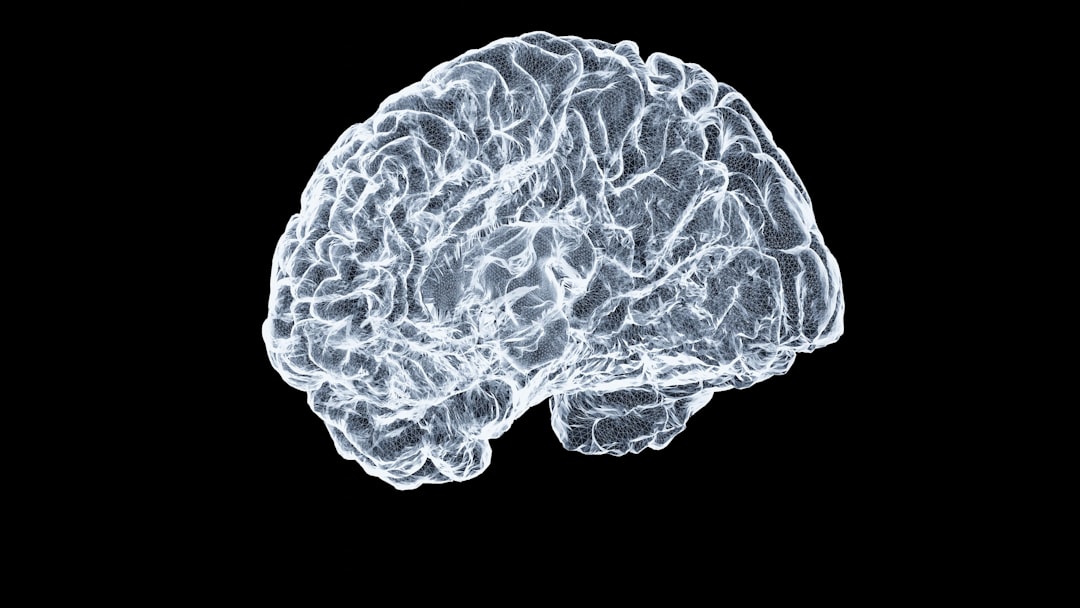
Four people lay inside an MRI scanner. Seven hundred more wore electrodes or sat in front of screens. They looked at images, watched videos, read text, listened to podcasts. Their brains lit up in patterns only they could feel. Meta took those patterns and taught a piece of software to reproduce them.
The software is called Tribe v2. It is not a mind-reading machine. It is a predictive model. Feed it a picture of a cat or a sentence in French or a snippet of a podcast, and it will forecast what a human brain would do in response. Where the blood would flow. Which neurons would fire. The model does not need to see the person. It does not need their consent or their presence. It just needs the stimulus.
Meta trained Tribe v2 on functional MRI data from those four individuals and on brain-activity recordings from the larger group of more than 700 volunteers. The volunteers were exposed to a range of material — visual, auditory, textual. The model learned to map the relationship between what people saw or heard and what their brains did. Over time, it got good at predicting the neural response to new content it had never seen before.
Then came the surprise. Meta says Tribe v2 can make predictions for languages that were not in its original training data. No additional training. The model somehow generalized. It figured out the underlying rules of how the brain processes language, not just the specific sounds or scripts it had been shown. That suggests the model is not just memorizing correlations. It is approximating something closer to a mechanism — a set of principles that govern perception and cognition across different inputs.
Meta says the model exists to help neuroscientists. Instead of recruiting human subjects for every new experiment, researchers could run hypotheses through Tribe v2 first. See what the model predicts. Test only the most promising theories on real people. That could speed up neuroscience. It could lower costs. It could let scientists explore ideas that would otherwise be too expensive or too ethically complicated to test on humans.
But the model also raises questions the company does not fully answer. If software can predict brain activity reliably, what does that mean for privacy? Tribe v2 is a research tool. It is not a commercial product. But the line between research and application is thin. The same technology that helps a neuroscientist test a theory about language processing could, in different hands, be used to infer what someone is thinking or feeling based on what they are watching. Meta says nothing about safeguards. The report mentions privacy concerns in passing. They are not resolved.
The development of Tribe v2 is part of a broader push to use artificial intelligence to model the brain. Other labs are working on similar projects. Meta is not alone. But Tribe v2 is notable for its scale — hundreds of volunteers, multiple types of stimuli, cross-lingual prediction. It is also notable for what it suggests about the brain itself. If a model trained on four people’s MRI scans and a few hundred electrical recordings can predict how a brain will respond to a language it has never heard, then maybe the brain’s underlying code is simpler than we think. Or maybe the model is capturing something universal about how humans process information.
Meta did not say when or how Tribe v2 will be made available to outside researchers. The company has a history of releasing some AI models openly and keeping others behind closed doors. For now, the model exists inside Meta’s systems. Neuroscientists outside the company cannot test it. They cannot verify its claims. They cannot build on it. The promise of accelerated research depends on access. Without access, Tribe v2 is just a demonstration. An impressive one. But still a demonstration.