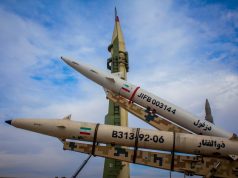
Iran launched five missiles into Jordanian territory. Jordan intercepted all five. That is the raw fact. But the meaning of that fact extends far beyond a single defensive success. It marks a geographic escalation of a conflict that, until now, had largely been fought through proxies and from a distance.
Jordan sits directly between Israel and the chaos of Iraq and Syria. It has long been a fragile buffer. The Hashemite kingdom has maintained a delicate balancing act — a peace treaty with Israel, a large Palestinian population within its borders, and a contested relationship with Iran. Missiles crossing into its airspace shatter that balance. Jordan is now, by force, a front-line state.
The military’s ability to intercept those missiles is not the headline. The headline is that the interception was necessary at all. A missile that reaches Jordanian airspace, even one that is destroyed, represents a failure of deterrence. It means Iran calculated that launching into Jordan was a risk worth taking. That calculation matters more than the hardware.
Markets have reacted. The report notes a sharp rise in volatility. Investors are nervous. They are waiting. The reason is simple: a conflict that spills across borders is harder to contain. It invites wider involvement. It makes a negotiated settlement less likely. The longer the volatility lasts, the more it damages regional economies that were already struggling. Jordan, a country with limited natural resources and a heavy debt burden, can least afford this uncertainty.
The United States has been a key player in attempts to broker peace. That role now becomes more complicated. Washington must support an ally that was just attacked, while also trying to prevent a wider war. The U.S. president will face questions. His response will be scrutinized not just for what it says, but for what it signals to Tehran. A weak response invites further Iranian aggression. An aggressive response risks dragging American forces into a direct confrontation.
Iran’s government has been accused of being a hostile actor. The missile launch into Jordan is the latest example. But the pattern is old. Iran uses missiles, proxies, and deniable operations to project power. This time, the deniability is thin. The missiles came from Iran. They landed in Jordan. The proof is in the wreckage.
The international community is watching. Condemnation is likely. Concrete action is less certain. The United Nations has limited tools. European powers have limited appetite for another Middle Eastern crisis. The result is often a cycle of statements and sanctions that do little to change behavior on the ground.
What comes next depends on Jordan’s response. The report says it will be closely watched. That is understated. Jordan has options. It can increase military cooperation with the United States. It can tighten its border. It can demand international guarantees. Or it can retaliate. Each choice carries risks. Retaliation risks a cycle of escalation. Inaction risks appearing weak. The balancing act just got harder.
The conflict shows no signs of abating. The missiles that were intercepted are proof that the fighting is expanding. Jordan’s military did its job. The question now is whether diplomacy can do its job before the next salvo arrives.