Utah desert, June 1, 2026 — infopulsetoday.com — It arrived from nothing. A single particle, carrying the energy of a fast-moving tennis ball, crashed into the Utah desert in 2021. Scientists at the Telescope Array called it Amaterasu.
For years, they assumed it was a proton.
A new study published in Physical Review Letters now suggests otherwise. The particle might be an atomic nucleus heavier than iron.
This changes things.
Dramatically. The problem with Amaterasu has always been its origin.
The particle appeared to come from a vast cosmic void.
No galaxy. No star. No obvious source.
For a proton, that makes no sense. Protons are fragile.
They interact with the background radiation that fills space.
They lose energy. They break down.
A proton traveling from an empty region should not arrive at Earth with 240 exa-electron volts of energy intact. But a heavy nucleus is different. It is tough.
It survives the journey.
Researchers ran simulations. The numbers lined up.
Ultraheavy nuclei, the kind forged in the most violent events in the universe, can cross vast distances without being stripped apart.
They punch through the cosmic microwave background. They do not scatter the way protons do.
This is not a small tweak to the theory.
It is a rethinking of how the most energetic particles in the universe reach us. If Amaterasu is a heavy nucleus, then the void it came from is not empty. Something happened out there.
Something extreme. The list of suspects is short.
Collapsing stars.
Neutron-star mergers. Gamma-ray bursts.
Each of these events can produce the heat and pressure needed to fuse elements heavier than iron. Each can launch particles at energies that dwarf anything created in human laboratories. The Telescope Array has been watching the sky for years.
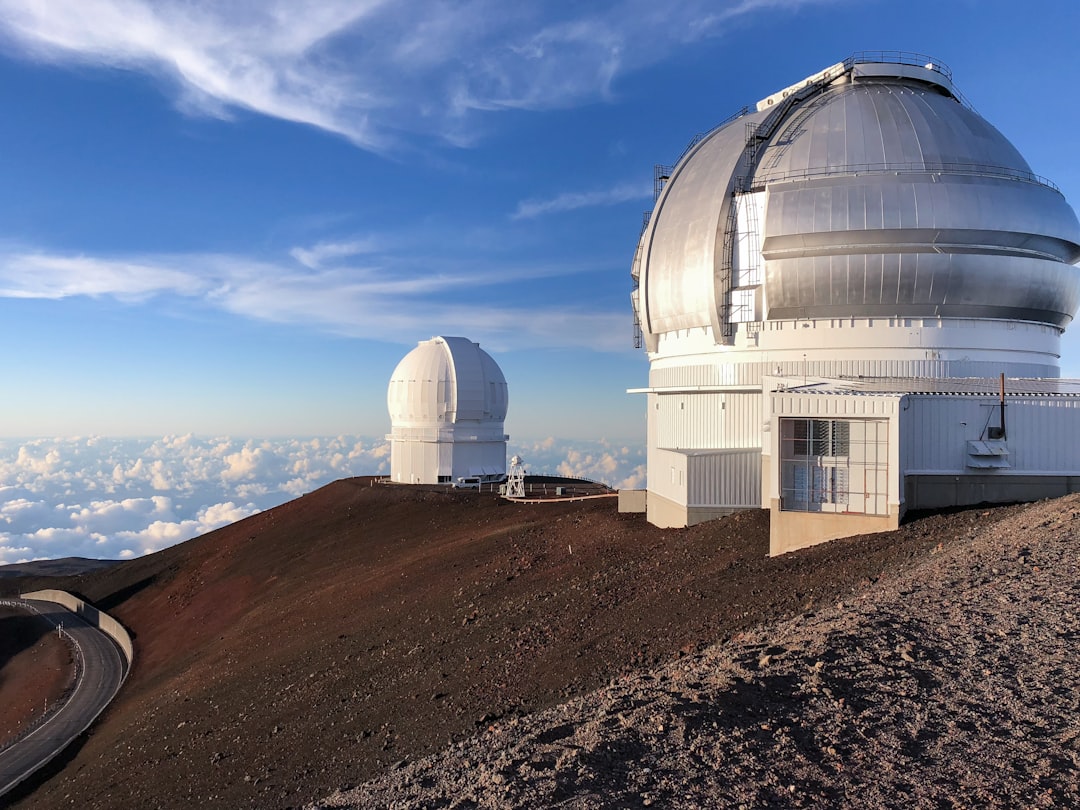
It sits in Utah, a grid of detectors spread across miles of desert.
It catches only a handful of these ultrahigh-energy cosmic rays per decade. Each one is a message.
Each one carries clues about the machinery that built it.
Amaterasu is the second-most energetic particle ever recorded. Only the Oh-My-God particle, detected in 1991, was stronger.
Both posed the same mystery.
Both seemed to come from nowhere. If heavy nuclei are the answer, then the void is not a problem. It is a clue.
The study is based on simulations, not direct observation. That is a limitation.
But the simulations are grounded in known physics.
They explain what direct observation cannot. Scientists now have a framework to test.
They can look for other heavy nuclei in the cosmic-ray data. They can refine the models. What matters most is the implication.
If these particles are heavy nuclei, then the universe is capable of accelerating matter to energies we barely understand.
The sources are not nearby. They are not obvious.
But they are real.
For decades, the origin of the highest-energy cosmic rays has been one of the open questions in astrophysics. The Amaterasu particle may have just provided the first real answer.
Not a proton from a known source.
A heavy nucleus from the void. That is a different story entirely.