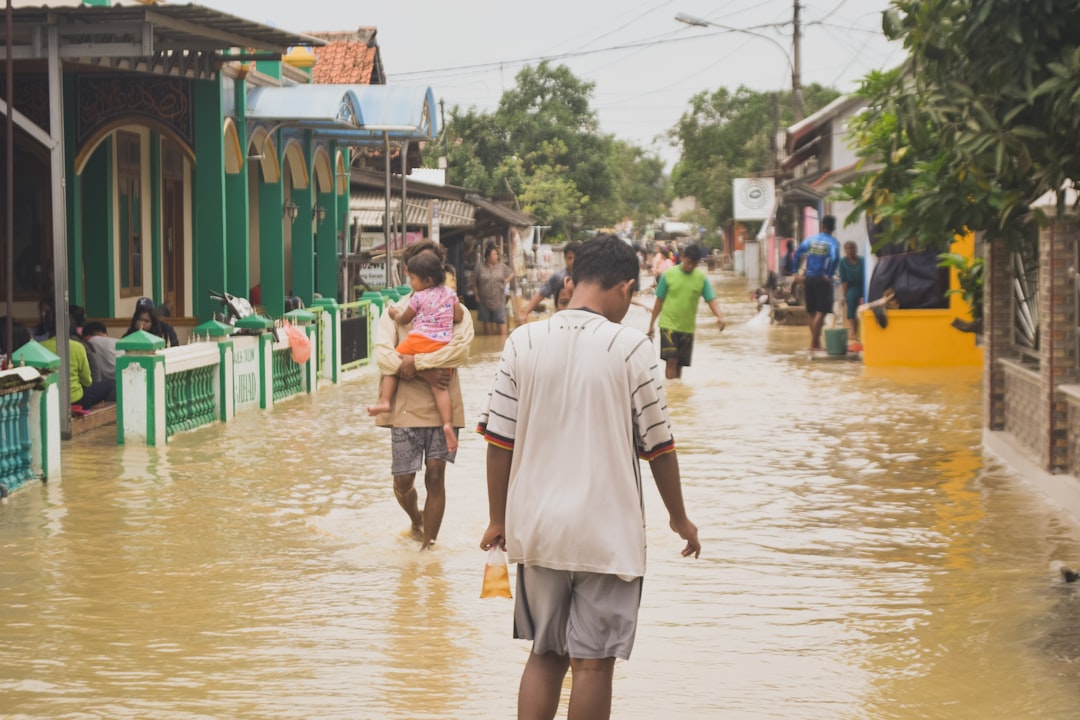
Northern Vietnam, September 11, 2024 — infopulsetoday.com — One hundred forty-five people are still missing. That number, as of September 11, 2024, may rise. The death toll from Typhoon Yagi already stands at 179 in northern Vietnam.
The storm hit hardest in Lào Cai, Yên Bái, and Cao Bằng provinces. Those are mountainous areas.
Landslides there are fast and they bury whole hamlets. Vietnam’s government calls Yagi the strongest typhoon to strike the country in 70 years. That is not a casual label.
A storm of this strength hitting a region with steep terrain means floodwaters do not drain. They pile up.
Then the hillsides give way. The 145 missing are almost certainly dead. Search crews in those provinces are digging through mud and rock.
They are not finding survivors. The storm tracked across Southeast Asia and into South China in early September. In the Philippines, they called it Severe Tropical Storm Enteng.
In Vietnam, it was Typhoon No. 3 of 2024. Names do not matter.
What matters is that Yagi reached Category 5-equivalent strength. That makes it a super typhoon. That status puts it among the most powerful tropical cyclones of the 2024 Pacific typhoon season.
What is at stake now is not just recovery. It is whether the next storm kills fewer people.
Northern Vietnam is vulnerable. The geography is fixed. The weather patterns are shifting.
The government acknowledged the scale of the disaster. That acknowledgment carries weight. It means the state knows its current infrastructure and warning systems failed to prevent this loss of life.
The argument for environmental resilience is not abstract here. It is concrete.
It is about where people build houses. It is about whether forests on slopes are cut down for timber or cash crops. It is about whether drainage canals are cleared or clogged.
It is about whether a village has a concrete shelter on high ground that fifty families can reach in fifteen minutes. Yagi did not create those conditions.
It exposed them. The storm was the trigger, but the vulnerability was already there. That is the hard fact.
A super typhoon will hit again. The question is whether the communities in Lào Cai, Yên Bái, and Cao Bằng will be any less exposed when it does. Disaster preparedness is not a slogan.
It is a budget line. It is a zoning law.
It is a decision to move a school away from a riverbank. None of those things are glamorous. They are expensive and they are slow.
But the alternative is 179 dead and 145 missing. That is the cost of not doing the work.
The storm itself is over. The rain has stopped in most places. The sun is out.
But the ground is still saturated. More landslides are possible in the coming weeks. The missing will likely never be found.
Their families will hold ceremonies without bodies. That is the aftermath.
Vietnam has rebuilt before. It will rebuild again. The real test is whether it rebuilds smarter.
Whether the new houses are placed on stable ground. Whether the new roads have proper culverts.
Whether the early warning systems reach the last village in the farthest valley. That is what resilience looks like. It is not a speech.
It is a retaining wall. It is a weather radio. It is a decision made before the typhoon forms.