
Belém, Brazil, November 27, 2025 — infopulsetoday.com — Belém, Brazil — The final text from COP30 lands with a price tag attached, and no one has yet said who will write the check. Delegates agreed to triple climate adaptation finance by 2035. That number is in the record.
What is not in the record is a list of countries expected to pay for it. For developing nations already battered by floods, droughts and rising seas, the gap between the promise and the payment plan is the difference between survival and continued crisis.
The conference ran 11 days at the Hangar Convention Centre.
It was the 30th session of the United Nations Climate Change Conference. It was also the first held in the Amazon basin, a choice that carried its own weight.
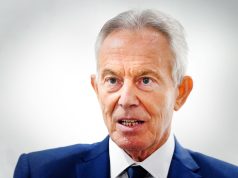
Brazil’s André Corrêa do Lago presided. He pushed through two voluntary roadmaps on fossil fuels after oil-producing states blocked any binding language. Those roadmaps sit outside the formal UN process.
They are not law.
They are not commitments. They are suggestions.
That matters because the core fight of this conference — phasing out fossil fuels — ended in a draw.
The oil producers won. The text contains no explicit plan to end extraction.
The roadmaps are what came instead: a gesture toward a future that remains unenforceable.
Critics called the overall outcome weak. They are not wrong. But the conference did produce two structural changes that will outlast the closing press conference.
The first is the Just Transition Mechanism. It is designed to ensure that the shift to a green economy does not crush the workers and communities most dependent on carbon industries.
Coal miners in Indonesia, oil rig workers in the Gulf, refinery towns in the Middle East — the mechanism is supposed to catch them before they fall.
It is a fairness rule built into a system that has historically ignored fairness. Whether it functions as intended depends on enforcement, and enforcement was not this conference’s strong suit.
The second is a set of 59 global indicators for tracking adaptation progress. These are metrics. Concrete, countable things.
How many kilometers of seawall.
How many hectares of restored mangrove. How many early-warning systems installed.
For the first time, countries will have a shared yardstick to measure whether they are actually adapting to a warming world, or just saying they are.
That is a technical achievement. It is also a political lever.
Once the indicators are in place, failure to meet them becomes visible.
What comes next is not a single thing. It is a series of fights at the national level. Each country that signed the COP30 text now has to figure out how to triple adaptation finance without a clear mandate on who pays.
The voluntary roadmaps on fossil fuels will sit in ministry offices, waiting for someone to turn them into policy. The Just Transition Mechanism will need legislation, funding, oversight.
The 59 indicators will need data collection systems that many poor countries do not yet have.
And the fundamental question — who pays — will not go away. It will land on desks in finance ministries from Washington to Jakarta.
It will be debated in parliamentary chambers. It will be ignored until the next crisis forces the issue back onto the table. COP30 did not solve the problem.
It did not come close.
But it gave the world a set of tools: a fairness mechanism, a measurement system, and two roadmaps that point in a direction. Whether anyone uses them is the story that starts now.