
May 15, 2026 — infopulsetoday.com — The new breast cancer drug Vepdegestrant, branded as Veppanu, did not arrive by accident.
It is the product of a deliberate corporate partnership between Arvinas and Pfizer, two drug developers that bet years ago on a then-unproven technology: heterobifunctional protein degradation. The U.S. approval, granted in May 2026, validates that bet. But the real story is what this drug represents for the future of cancer treatment.
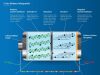
Vepdegestrant works by hunting down and dismantling specific proteins that drive cancer growth. This is not the standard approach.
Most cancer drugs block a protein’s activity temporarily.
Vepdegestrant eliminates the protein entirely. The difference matters.
Blocking leaves the protein intact, ready to resume its function once the drug clears the body. Degrading removes the machinery. For patients with estrogen receptor-positive breast cancer, the target protein is the estrogen receptor itself.
Remove it, and you remove a primary fuel source for the tumor.
The drug is a pill. That detail is easy to overlook, but it changes the treatment experience.
Oral administration means no infusion chair, no hospital parking, no hours lost to a clinic visit.
Patients take it at home. That convenience can improve adherence, and better adherence often means better outcomes.
For a disease requiring long-term therapy, the difference between a pill and an IV is not trivial.
Arvinas and Pfizer did not develop Vepdegestrant in isolation. The approval required extensive clinical trials that demonstrated safety and efficacy. The Food and Drug Administration’s review process is rigorous.
That Vepdegestrant cleared it suggests the data were strong. But the approval also signals something broader: regulators are willing to embrace new mechanisms of action when the evidence holds.
Heterobifunctional protein degraders represent a class of drugs that was largely theoretical a decade ago.
The concept was simple enough—design a molecule that grabs a target protein and tags it for destruction by the cell’s own waste-disposal system. Executing that concept proved difficult.
The molecules are large, complex, and hard to optimize for oral absorption. Vepdegestrant overcame those hurdles. Its approval opens the door for other degraders in development for different cancers and even non-cancer diseases.
Pfizer’s involvement is telling.
The company has a deep oncology portfolio, but it has also faced patent cliffs on older blockbusters. Partnering with Arvinas on a novel platform gives Pfizer access to a technology that could produce multiple drugs.
Arvinas, a smaller biotech, gets the manufacturing and commercial muscle of a pharmaceutical giant.
The arrangement is common in the industry, but the stakes here are higher because the technology is unproven at scale. For patients with ER-positive breast cancer, Vepdegestrant offers a new option.
That is the immediate takeaway.
But the longer arc points toward a shift in how cancer drugs are designed. Instead of inhibiting proteins, the next generation of medicines will degrade them. Vepdegestrant is the first of that generation to reach the U.S. market.
It will not be the last.