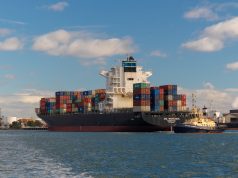
Monrovia, Liberia, July 9, 2025 — infopulsetoday.com — The Red Sea is a graveyard for a ship today, and the economic shockwaves are just beginning to register. The Liberian-flagged “Eternity C” sits on the bottom after a Houthi attack Monday. Four men are dead.
Fourteen are missing. Seven were pulled from the water alive.
The rescue operation is still running, but hope is thinning with every hour that passes. This is not just a maritime tragedy. It is a direct hit on the arteries of global trade.
The Red Sea is a choke point. Every day, tankers and container ships slide through the Bab el-Mandeb strait, carrying oil, grain, and manufactured goods between Asia and Europe.
The Houthis, backed by Iran, have made that passage a kill zone. The “Eternity C” is the latest and deadliest proof. Look at the flag on the stern.
Liberia. A West African nation of 5.5 million people, far from the Yemeni coast, now finds itself at the center of a geopolitical storm. Monrovia, the capital, is a major hub for international shipping.
Liberia’s entire economy depends on the registry fees and the confidence of global shippers who fly its flag. Every attack on a Liberian vessel erodes that confidence.
The Liberian government has not yet spoken. It will face enormous pressure to act, to demand more from the international community, to take a harder line against the Houthis and their patrons in Tehran. The Houthi militia is not a new threat.
They have been at war with the Saudi-led coalition for years. They have hit civilian ships and oil tankers before.
But sinking a vessel and killing four crew members changes the calculus. This is the kind of event that forces governments to move. The United States, under President Biden, has been working with regional allies to contain the Houthi threat.
That work just got harder. The free flow of commerce through the Red Sea is no longer a matter of policy debate. It is a matter of life and death for sailors and for the supply chains that keep the global economy breathing.
What happens next is the question. Insurance premiums for ships transiting the Red Sea will spike.
Shipping companies will reroute vessels around the Cape of Good Hope, adding weeks to voyages and millions to fuel costs. That cost will be passed on. Every container of goods that takes the long way drives up prices for consumers in Europe, in Asia, in the United States.
The Houthis, sitting in the mountains of northern Yemen, have demonstrated that a relatively cheap missile can impose a heavy tax on the entire world. The rescue operation continues.
But the focus is shifting from the seven survivors to the fourteen who are missing. Their families are waiting. Their governments are waiting.
The search area is broad, the water is deep, and the window for finding anyone alive is closing fast. This is the kind of incident that does not stay contained. It ripples outward.
It touches the port of Monrovia, the insurance markets in London, the naval deployment plans in Washington, and the diplomatic calculations in Riyadh. The Houthis have made their point.
The question now is whether the world will respond with more than statements of concern. The “Eternity C” is gone. The consequences are just beginning.